Rubber Sign Weights That Hold Through Wind & Weather
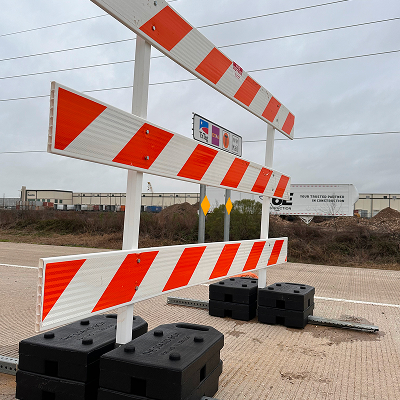
A sign only works while it is standing. The moment it goes over, the message is gone and the hazard it was warning people about is now unmarked. That is the whole reason sign weights exist, and it is the reason the choice of weight matters more than most crews give it credit for. The Stand Box is a 30 lb rubber sign weight built to hold road signs, detour markers, and portable stands in place without leaking, refilling, or floating away.
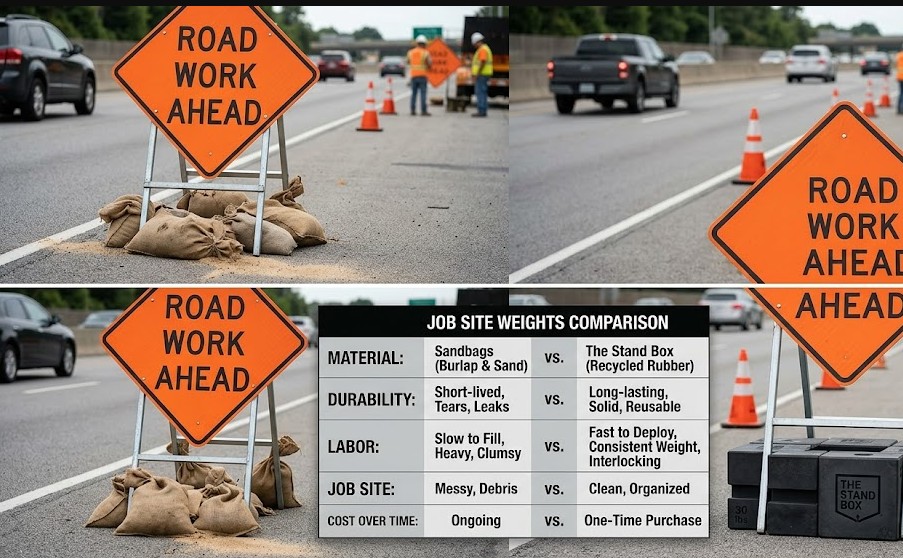
Most crews still reach for sandbags because that is what has always been on the truck. The results are predictable. Bags tear on gravel and asphalt, then leak sand until the weight that was holding the sign is half of what it started as. Rain soaks the fabric and rots it from the inside. The sun does the rest over a season.
The failure is rarely dramatic. A bag loses a little sand each week, nobody weighs it, and the sign stands fine until the first real gust. Then it goes down in a traffic lane, and the crew finds out the hard way that the weight had been failing for a month.
Sand also shifts. A bag draped over a sign foot moves as the sand settles, so the load never sits evenly on the base. The bag ends up beside the sign foot rather than on it, and a weight that is not on the base is not doing much.
The Stand Box is solid. It is molded from 96% compressed recycled rubber with a 4% compound, and there is nothing inside it to leak, settle, or wash out. It weighs 30 pounds the day you buy it and 30 pounds years later, wet or dry.
A Sign Base Weight That Locks On
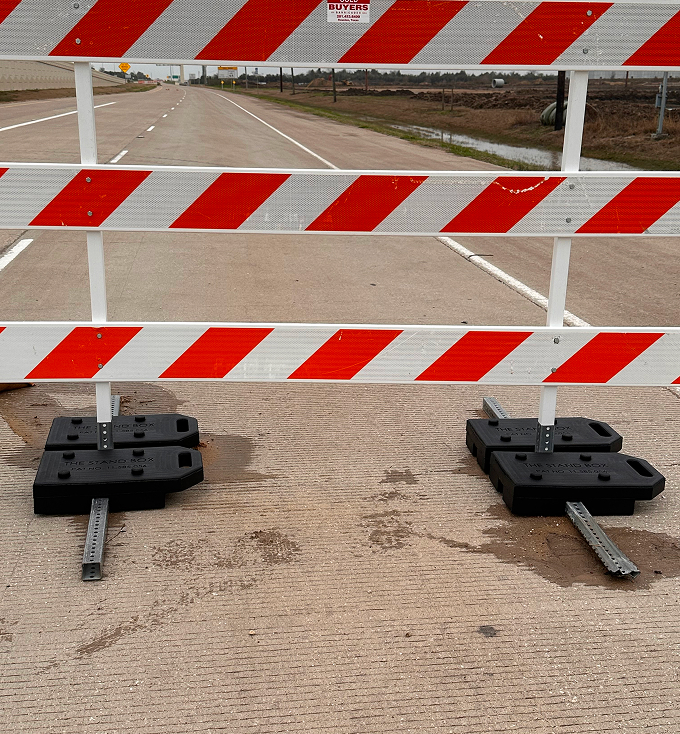
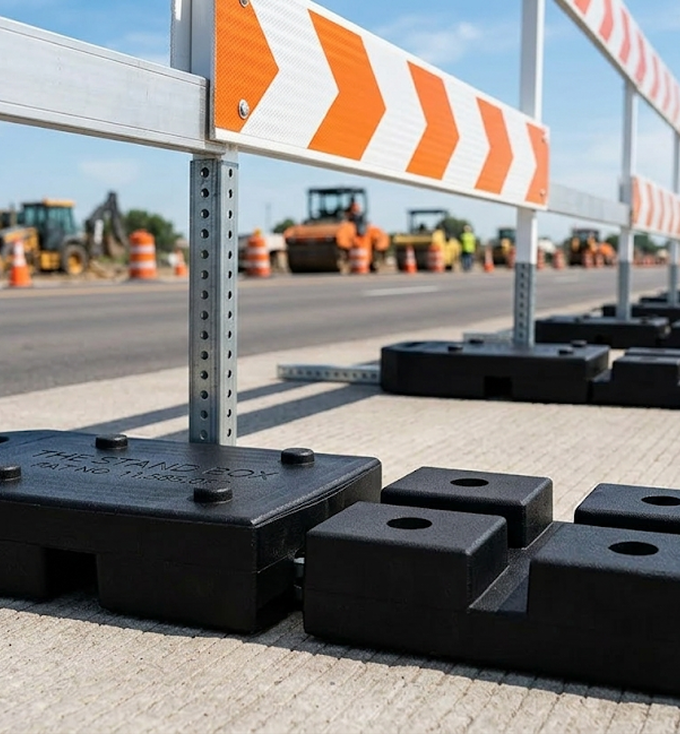
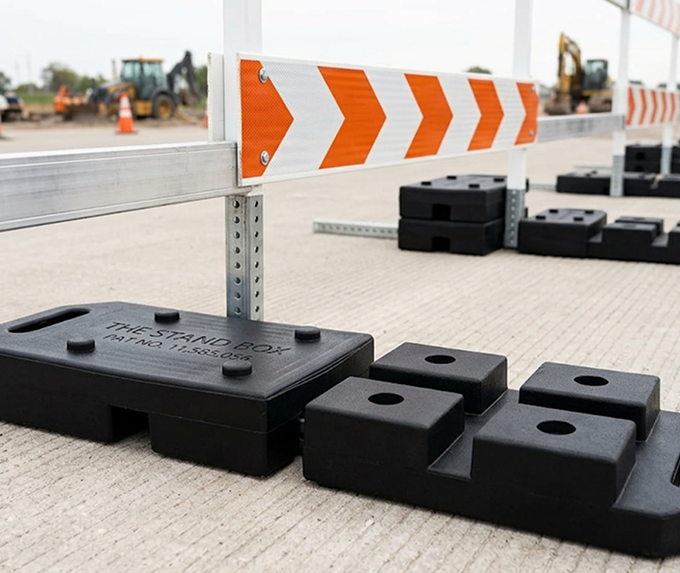
The bottom of every unit is molded with dual channels that fit over the feet of temporary road signs and fence frames. The weight grips the base instead of resting near it. This is the part that separates a sign base weight from a block sitting on the ground. When wind pushes the sign, the weight and the base move as one piece, which is to say they do not move at all.
Anyone searching for traffic sign base weight rubber is looking for exactly this. A molded fit, not a bag balanced on a foot.
Heavy Duty Weights for Signs That Stack
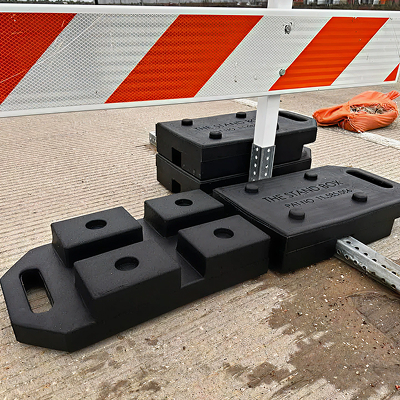
Interlocking knobs on top and matching holes on the bottom let units stack on each other and stay stacked. When a sign needs more than 30 pounds, a second unit goes on top and locks in. Nothing slides off, and the stack holds together in the wind.
Stacking also saves room on the truck and in the yard. Heavy duty weights for signs are not much use if the crew cannot fit a day’s worth in the bed.
Built to Be Carried
A molded handle runs through the body of the unit. One person picks it up with one hand and sets it on a sign foot. On a shift where a crew is placing dozens of signs, that handle is the difference between a routine setup and a long afternoon.
It Will Not Float
Standing water is where sandbags give up. A soaked bag slides, a partly empty one floats, and the sign goes with it. The Stand Box will not float. On a flooded shoulder or in the middle of a storm, it stays put.
A permanent solution to a temporary problem.
Sign Weights for Windy Days
Wind is the whole test. A roll-up sign on a portable stand catches air like a sail, and a framed sign is not much better. The force comes in gusts that hit the face of the sign and try to lift one side of the base off the ground.
Sign weights for windy days have to do two things. They have to add enough mass to resist that lift, and they have to stay connected to the base while it happens. Thirty pounds handles the first part for most sign stands. The molded channels handle the second. Add a second unit on the stack when the forecast calls for it, and the setup holds.
Crews that work through storm season learn to check the weight before they check the sign. If the weight is solid and locked on, the sign takes care of itself.
The Stand Box goes on any sign that has to stand outside and stay readable. Traffic control crews use it on road signs, detour markers, lane closure signage, and portable stands across active work zones. Construction sites use it on site signage, entry markers, and safety notices. Departments of transportation and port authorities use it where loose sand around a sign base is not acceptable. Real estate and event crews use it on directional and wayfinding signs that need to look right and stay upright through a weekend.
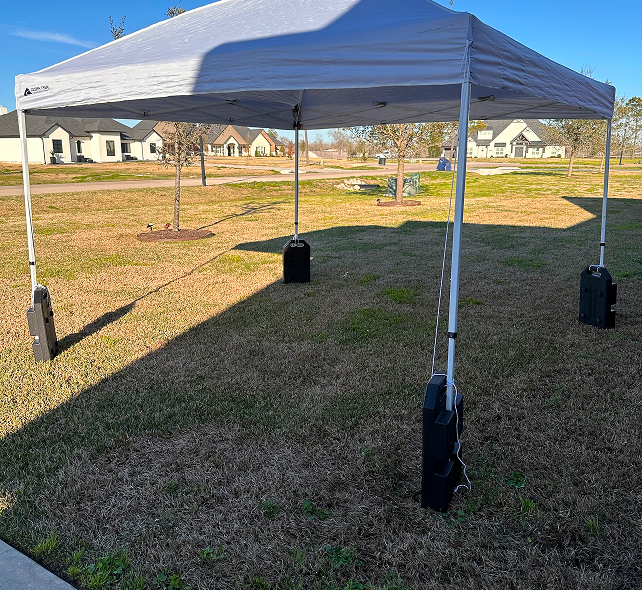
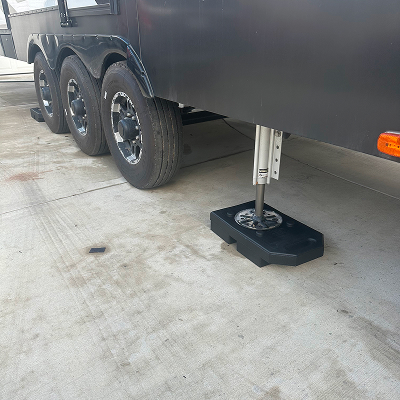
The same weight also comes off the sign and goes onto a fence foot, a tent leg, or a tarp edge. That is part of why crews buy them once and keep finding uses.
Sandbags win on the invoice and lose everywhere else. A bag costs a dollar or two. The Stand Box costs $44.95. For one week of dry work, sand is the cheaper call, and nobody is going to argue otherwise.
Run the same math across a season. Bags tear and get replaced. Crews stop to refill them, and that labor is billed to somebody. Sand has to be stored, hauled, and filled before it ever reaches a sign. Then add the cost of one sign that went down in traffic, which can mean a callout, a fine, or a claim.
The Stand Box is bought once. It comes off the truck ready, goes on the sign in seconds, and comes back for the next job. Over a full year of work, the weight that costs more up front is the one that costs less.
Weight is 30 lb solid. Material is 96% compressed recycled rubber with a 4% compound. The base has dual channels sized for the feet of temporary road signs and fencing. The top has interlocking knobs and the bottom has matching holes for stacking. A molded handle is built into the body. The unit will not float and is rated for continuous outdoor use in sun, rain, and freezing conditions. Patented February 21, 2023. Made in the USA from recycled material.
Price is $44.95 each. Bulk pricing is available for commercial and government orders.
Thirty pounds holds most portable sign stands in normal wind. For higher wind or larger sign faces, stack a second unit on top. The interlocking knobs keep the stack together.
Do these sign weights need refilling?
No. The Stand Box is solid rubber with no fill inside it. There is nothing to leak and nothing to top off.
Will rubber sign weights work on my sign stand?
The base channels are molded to fit over the feet of standard temporary road signs and fencing. If you are working with a stand you are unsure about, send us the details and we will tell you straight.
Can they stay outside all year?
Yes. Compressed recycled rubber handles sun, rain, and freezing temperatures without breaking down the way fabric bags do.
Secure Your Signs Today
Stop refilling. Start securing. The Stand Box is a rubber sign weight that holds through wind, sits through rain, and comes back out for the next job.
Request bulk pricing, place a commercial order, or send us your questions and we will respond promptly.