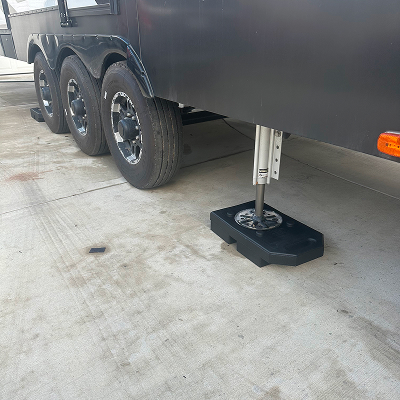
Construction Barricade Weights That Keep Your Work Zone Standing
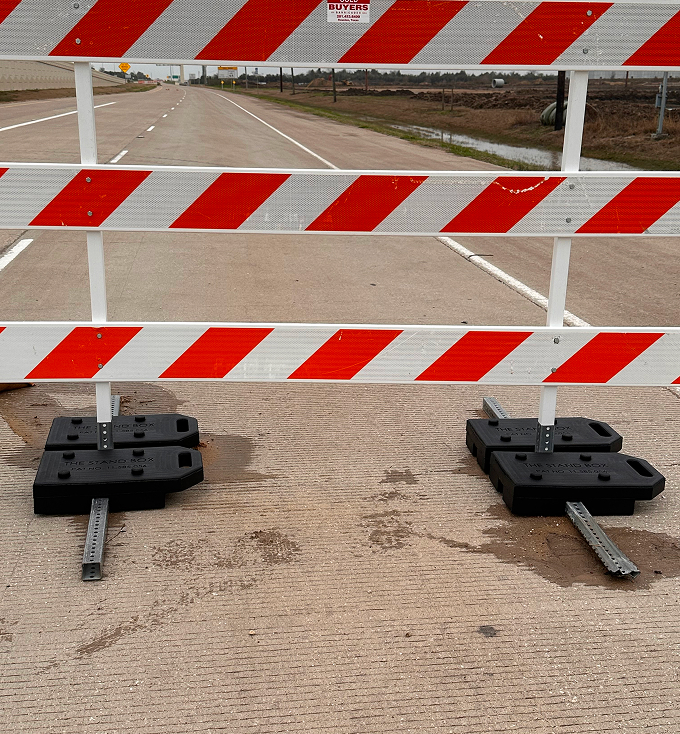
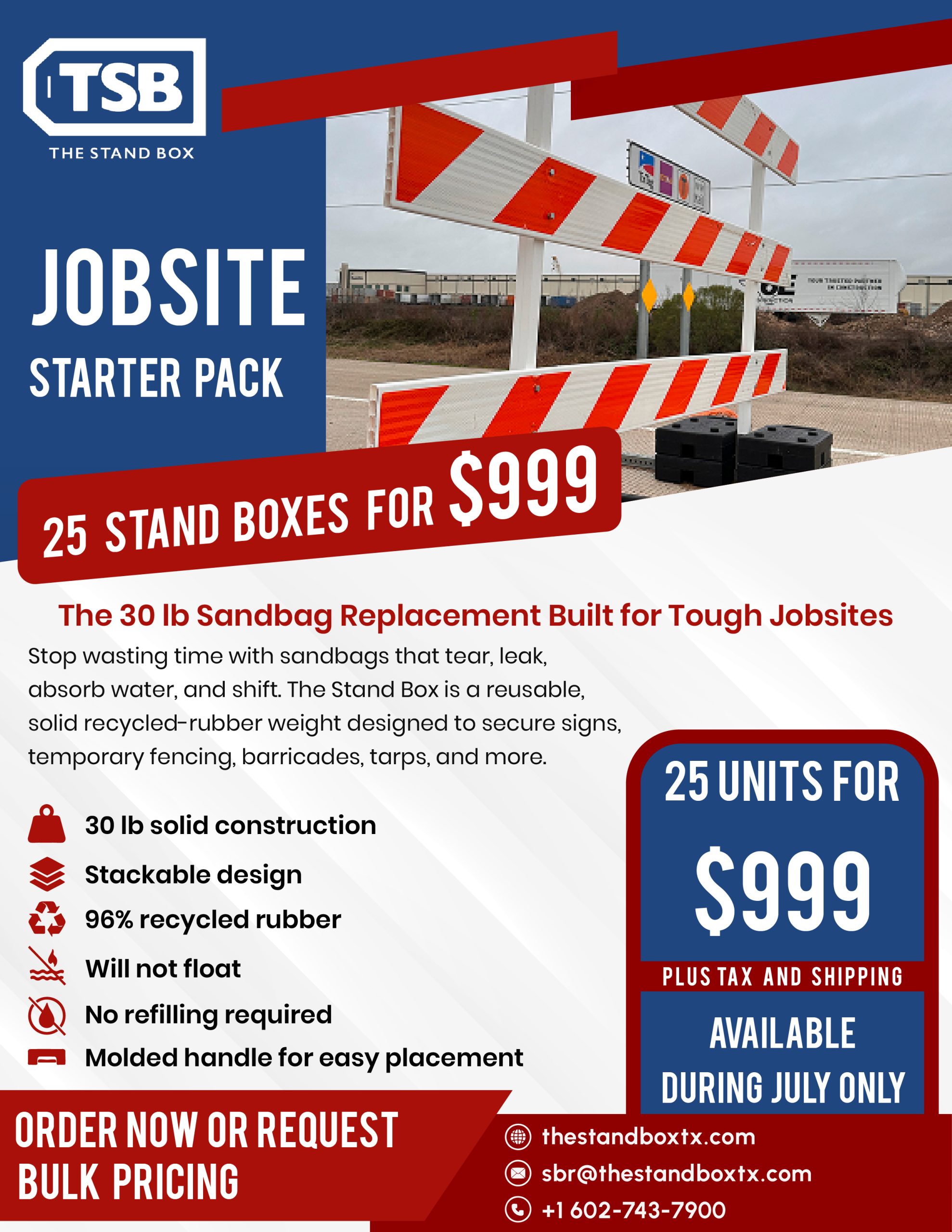
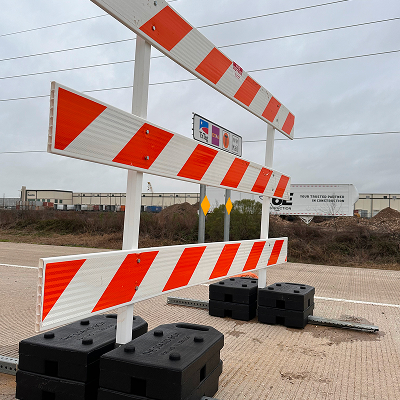
A construction barricade does one job. It tells people where they cannot go. It does that job only while it is upright, square, and where the crew set it. Wind, passing trucks, and uneven ground all work against that, and the thing standing between a controlled work zone and a barricade lying in a traffic lane is the weight holding the base down. The Stand Box is a 30 lb rubber weight built for exactly that.
Barricades are built to be seen, which means they are built with a large flat face. That face catches wind. Every gust pushes against it and tries to lift the frame off the ground on one side.
The other force is traffic. A truck passing at speed drags air behind it, and that pull hits every device along the shoulder. On a busy road, a barricade takes that hit hundreds of times in a shift. Add sloped shoulders, loose gravel, and fresh grade, and the base has very little holding it in the first place.
None of this is dramatic while it is happening. The barricade shifts a few inches at a time. Nobody sees it move. Then the crew comes back after a storm and finds the closure open and the device thirty feet away.
Most crews weigh barricades with sandbags because that is what is on the truck. Barricade duty is where sandbags fail fastest.
The bags sit on a metal or plastic base, often with an edge or a bolt head under them. Every time the barricade rocks, the fabric grinds against that edge. Bags tear open within weeks. Once a bag tears, sand runs out, and the weight drops without anyone noticing.
Rain makes it worse. Wet sand is heavy, but soaked fabric rots, and a bag that sat through one season is brittle before the next one starts. A bag that floats or slides in standing water takes the barricade with it.
Then there is the shape problem. A sandbag is a loose sack. It drapes over a base rather than gripping it. When wind lifts the frame, the bag stays on the ground and the frame comes out from under it.
The Stand Box is a solid 30 lb weight molded from 96% compressed recycled rubber. There is nothing inside it to leak, settle, or run out.
The Base Channels Do the Work
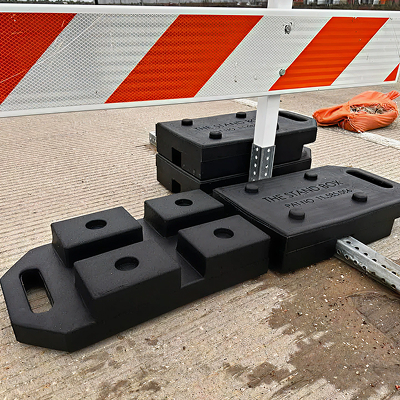
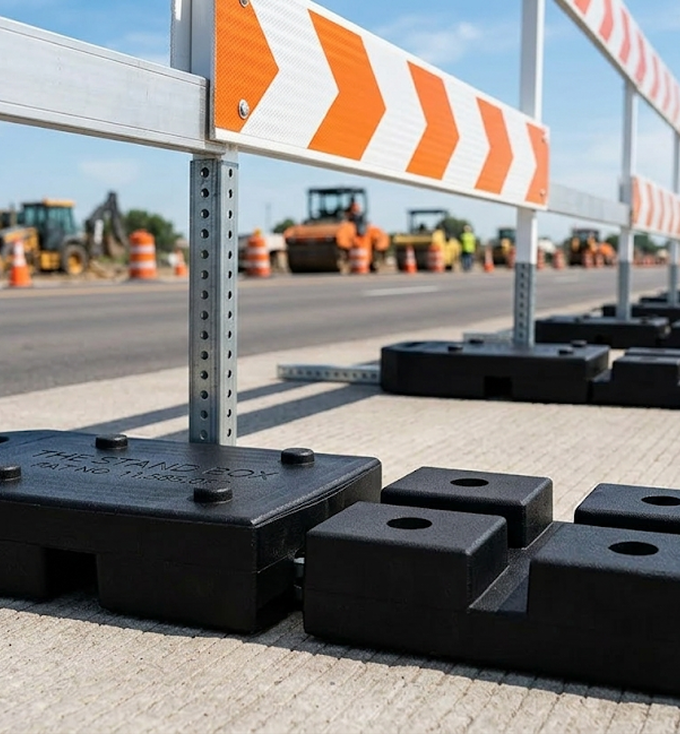
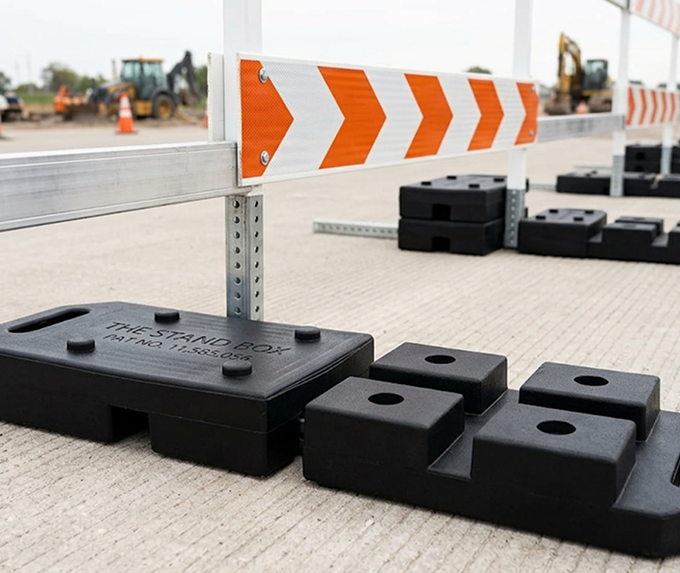
The bottom of each unit is molded with dual channels sized to fit over the feet of temporary road signs and fence frames. The weight sits down onto the base and grips it. When wind pushes the barricade, the weight and the frame move as one piece, which means they stay put.
That mechanical fit is what a sandbag cannot copy. Thirty pounds resting near a foot is not the same as thirty pounds locked onto it.
Stackable for Bigger Devices
A Type I barricade on a quiet street needs less than a Type III unit closing a full road. Interlocking knobs on top and matching holes on the bottom let units stack and lock together. When a device needs sixty pounds, a second unit goes on and stays on. The stack does not slide apart in wind.
The same holds for a run of temporary fencing. A fence panel acts like a sail and pulls hard at every foot, so stacking a second unit on a foot builds up the weight right where the run pulls hardest, and the locked stack holds instead of coming apart.
It Does Not Float
Work zones flood. Shoulders pool, trenches fill, and low spots turn into standing water during a storm. The Stand Box will not float. Crews use it in exactly the conditions where sandbags start sliding.
Nothing to Refill
The unit weighs 30 pounds on day one and 30 pounds years later. No topping off, no replacing torn bags, no stopping mid shift to fix a weight. It comes off the truck ready and goes back on the truck when the job wraps.
A permanent solution to a temporary problem.
Barricade Weights & Jobsite Safety
Jobsite safety planning covers the crew first, and it also covers the devices protecting them. A barricade that tips over stops warning drivers the second it hits the ground, and a work zone with a gap in it is a work zone where a car ends up somewhere it should not be.
The MUTCD and local guidelines set out how devices should look and where they belong. They assume the device is standing. Keeping it standing is on the crew, and it comes down to the weight at the base.
There is a labor side to this too. Every hour spent walking a site to reset tipped barricades and refill leaking bags is an hour not spent on the actual work. Crews that weigh devices properly the first time stop spending mornings picking up yesterday’s setup.
The Stand Box works across the range of devices in a work zone. Traffic control companies use it on Type I, Type II, and Type III barricades, on portable sign stands, and on lane closure setups. Commercial construction crews use it on site signage, entry barricades, and temporary fencing around staging areas. Departments of transportation and port authorities use it where loose sand around a device is not acceptable. Chemical and gas plants use it in areas where a torn bag spilling sand creates its own problem.
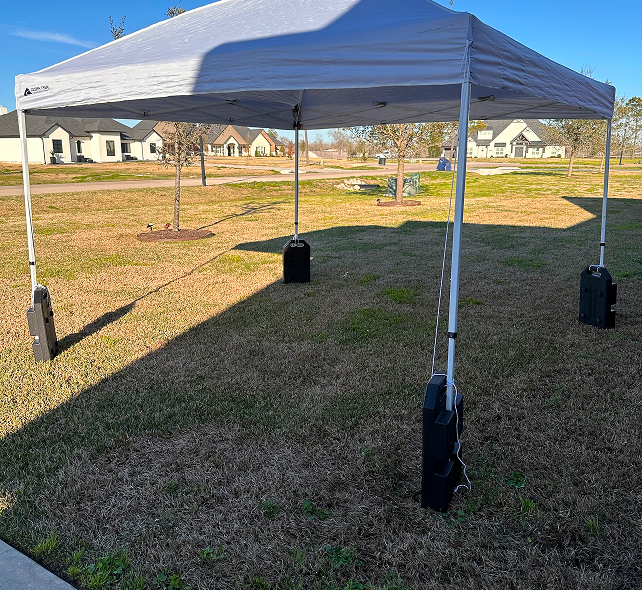
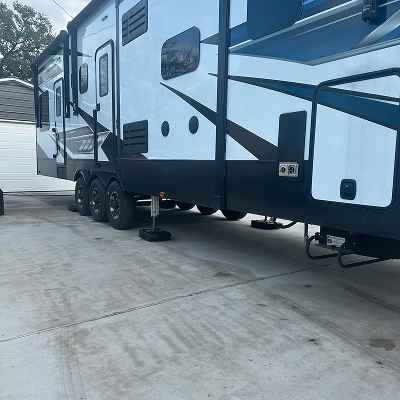
The same weight moves from a barricade to a fence foot to a tarp edge to a tent leg. One unit covers the whole site.
Sandbags are cheap on the invoice. A bag runs a dollar or two, and the Stand Box is $44.95. For a short dry job, sand is the cheaper call.
Across a season the math turns over. Bags tear on barricade bases and get replaced. Crews stop to refill them. Sand gets stored, hauled, and filled before it reaches a device. Add one barricade that went down in a live lane, and the cost of the cheap option lands all at once.
The Stand Box is a rubber weight bought once. It holds through the season, comes back for the next job, and keeps holding for years. The unit that costs more at purchase costs less by the time the project closes.
Weight is 30 lb solid. Material is 96% compressed recycled rubber with a 4% compound. The base has dual channels sized for the feet of temporary road signs and fencing. The top has interlocking knobs and the bottom has matching holes for stacking. A molded handle is built into the body for one-hand carrying. The unit will not float and is rated for continuous outdoor use in sun, rain, and freezing conditions. Patented February 21, 2023. Made in the USA from recycled material.
Price is $44.95 each. Bulk pricing is available for commercial and government orders. Government contracting information: UEI D6HKE6ZAKTC1, CAGE 9VS60, Primary NAICS 561990.
One 30 lb unit holds most Type I and Type II devices in normal conditions. Type III barricades and setups in high wind take two or more, stacked using the interlocking knobs.
Will it fit my barricade base?
The channels are molded to fit the feet of standard temporary road signs and fencing. Send us the device you are running and we will tell you straight if it fits.
Do rubber barricade weights need refilling?
No. The Stand Box is solid rubber. There is no sand inside it and nothing to top off.
Can it stay on site through the winter?
Yes. It is rated for continuous outdoor use, including freezing conditions. It does not rot, tear, or break down the way fabric bags do.
Secure Your Work Zone Today
Stop refilling. Start securing. The Stand Box holds construction barricades, signs, and fencing through wind and water, and it comes back out of the truck ready for the next setup.
Request bulk pricing, place a commercial order, or send us your questions and we will respond promptly.