
Every work zone needs a way to keep people out of spots that are not safe to enter, and a construction barricade is how crews draw that line. It warns drivers, guides pedestrians, and keeps workers separated from moving traffic. The catch is that not every barricade does the same thing. Reach for the wrong one and you can leave a gap in your setup, slow the job down, or put someone in harm’s way. Here is a look at the main types you will see on a site and when each one earns its place.
Why the Right Barricade Choice Matters
A barricade is a communication tool as much as a physical block. Drivers read it in a second or two and decide where to go. If the setup is confusing or looks temporary in the wrong way, people ignore it. Local and federal guidelines, including the MUTCD, spell out how these devices should look and where they belong. Following those rules keeps you compliant and keeps the site readable for everyone passing through.
The type you pick comes down to a few things: how fast traffic is moving nearby, how long the setup will stay in place, and what you are closing off, a lane, a sidewalk, or an entire road. Sort those out and the choice gets clearer.
Type I & Type II Barricades
Type I Barricades
A Type I barricade has a single rail with reflective striping, mounted on a frame or portable base. You will see these on smaller projects, sidewalk closures, and low-speed areas. They are light, easy to move, and quick to set out when a crew needs to block a short section fast.
Because they sit low and carry one rail, Type I units work best where traffic is slow and the closure is minor. They are not meant to stop a car. They tell people to stay clear of a small hazard like an open utility box or a fresh patch of concrete.
Type II Barricades
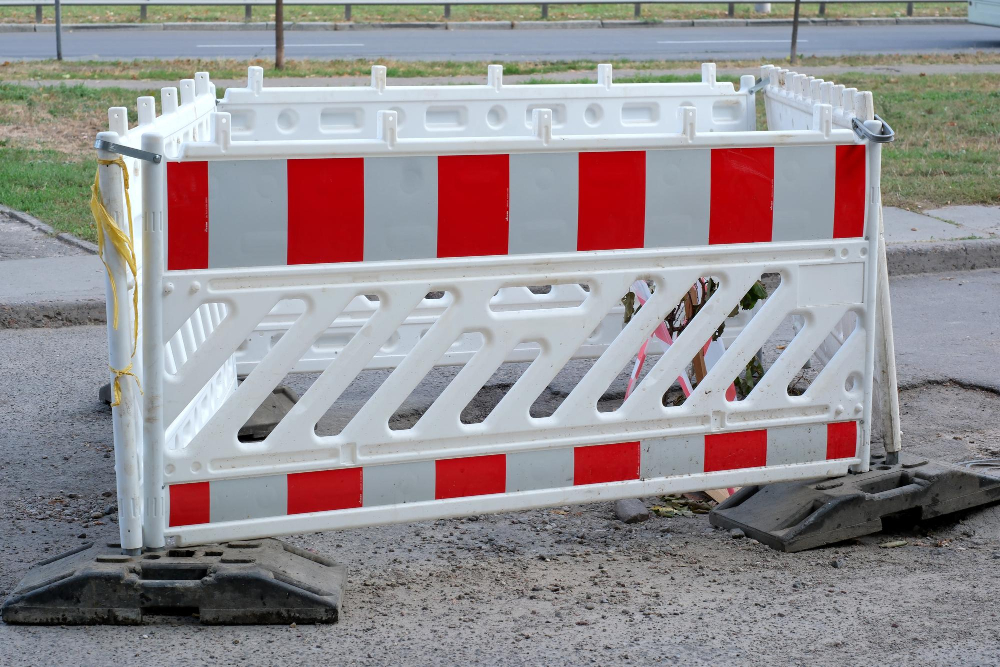
A Type II barricade adds a second rail, which gives it more visibility. These fit medium-duty work such as detours on collector streets and pedestrian reroutes. The extra rail helps at dusk and at night, when a single stripe can be easy to miss.
Type III Barricades
When a road closes completely, a Type III barricade is the standard. It carries three rails and spans a wider frame, and it is built to signal a full stop rather than a minor detour. Crews use these at road closures, bridge work, and any point where traffic cannot continue.
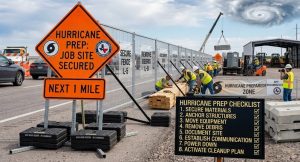
Type III units are larger and heavier, and they often anchor signs that say Road Closed or Detour. Because they sit across a full lane or road, keeping them steady in wind is a real concern. A gust can walk an unweighted barricade into live traffic, so the base needs to be held down.
Channelizing Devices: Cones, Drums, & Vertical Panels
Not every boundary needs a rail barricade. Channelizing devices guide traffic through or around a work zone without fully blocking it.
Cones are the quick option for short tasks and lane shifts. Drums, the tall barrels with reflective bands, hold up better in wind and stay visible at highway speeds. Vertical panels are narrow and work well in tight spots where a drum or barricade will not fit, such as a shoulder closure next to a barrier wall.
These devices move traffic rather than stop it, so they show up on active roads where cars keep flowing past the crew.
Fencing & Longer-Term Barriers
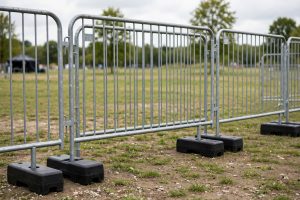
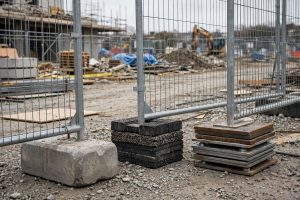
Some jobs run for weeks or months, and that changes what you need. Temporary fencing marks off staging areas, equipment yards, and the outer edge of a large site. It keeps the public out and gives crews a defined space to work.
For higher protection, water-filled and concrete barriers take over. Water-filled plastic barriers link together and can be moved with a crew and a hose. Concrete barriers, often called Jersey barriers, handle the heaviest duty and separate traffic from work areas on highways. They are hard to move and usually stay put for the length of the project.
Matching the Barricade to the Job
A simple way to think about it is to match the device to the speed, the duration, and the level of protection you need.
Slow traffic and a short task point to Type I barricades or cones. A nighttime detour on a busier street leans toward Type II units and drums. A full road closure calls for Type III barricades and clear signage. A long project with staging areas needs fencing, and a highway work zone next to fast traffic needs water-filled or concrete barriers.
Getting this match right is part planning and part experience. Overbuild and you waste money and setup time. Underbuild and you leave a gap that traffic can exploit.
Keeping Barricades & Signs Standing
Picking the right device is only half the job. The other half is keeping it where you put it. Wind, passing trucks, and uneven ground all push against barricades and signs, and a device that tips over stops doing its job the moment it hits the ground.
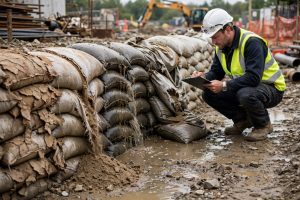
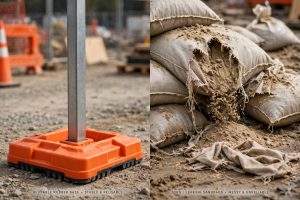
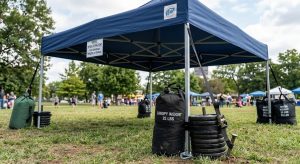
Signs and lighter barricades usually rely on added weight at the base to stay upright. Traditional sandbags have filled that role for years, but they tear, leak, and lose their hold over time. More crews now reach for solid weights that lock onto the base of a sign or frame and hold through wind and weather. A steady base keeps your setup readable and keeps the work zone safe, which is the whole point of putting a barricade out in the first place.
Final Thoughts
Construction barricades are not one size fits all. Type I and II units handle lighter closures, Type III barricades close roads, channelizing devices route traffic through active zones, and fencing or concrete barriers cover long-term and high-protection needs. Learn the categories, match them to the speed and length of the job, and keep everything weighted down and standing. Do that and your work zone stays safe, compliant, and clear to everyone who passes through.