
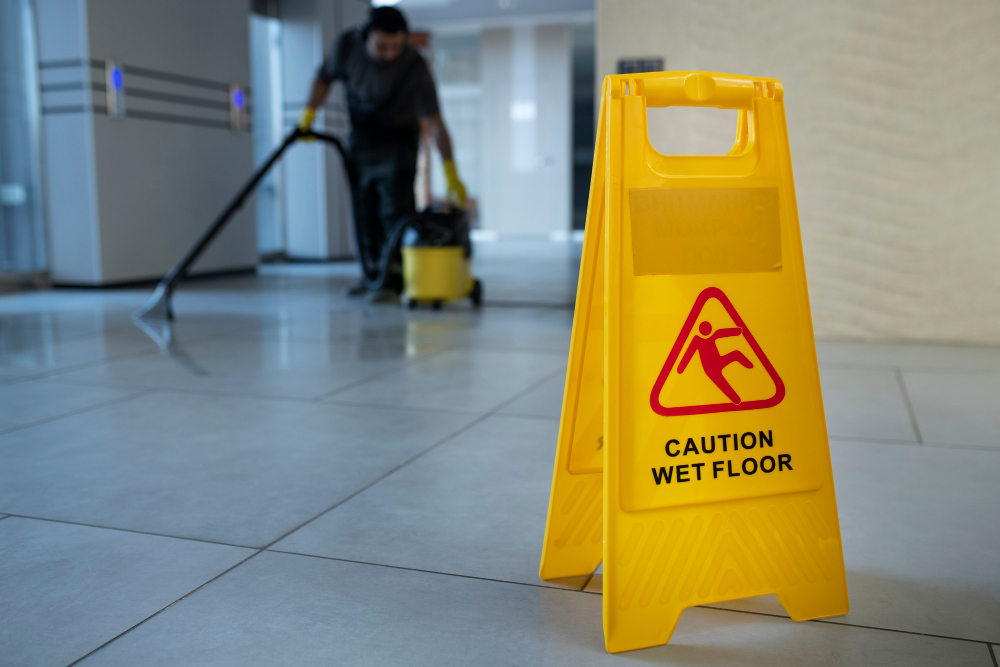
If you are resetting the same sign twice a week, the sign is not the problem. Something in the setup is wrong, and it is almost always one item from the same short list. Here is how to work through it and stop replacing the same sign every Monday.
Start by Watching How It Falls
Before changing anything, look at how the sign goes down, because it tells you most of what you need to know about why.
A sign that falls flat on its face went over from wind hitting the front, while a sign that folds or twists has a frame problem rather than a weight problem. A sign that has walked twenty feet down the shoulder was never anchored at all and was only heavy enough to move slowly. A sign lying next to an intact sandbag means the bag was never gripping the base in the first place. Each of those has a different fix, and treating them all as a weight problem is why crews keep buying more sand and keep resetting the same sign in the same spot.
Reason One: The Weight Is Lighter Than It Was
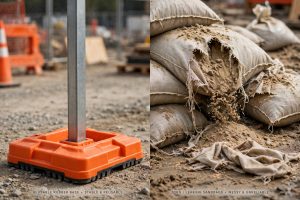
This is the most common cause and the hardest one to see. Sandbags leak, because the fabric tears on a metal sign foot, on gravel, or on a bolt head, and sand runs out a little at a time. A bag that held 40 pounds in the spring is holding 25 by midsummer, and nothing about it looks any different from ten feet away.
So the crew sees a sign standing up with a sandbag on the base and reasonably concludes the setup is fine. It is not fine. It has been failing for months, and the first serious gust proves it. If your signs started falling and nothing else about the site changed, check the weight of your weights. Pick a few bags up, and if they feel lighter than they should, they are, and every bag on that site is somewhere on the same curve.
Reason Two: The Weight Is Not on the Base
This one catches people, because the bag can be full and intact and still completely useless. A sandbag is a loose sack, so setting it over a sign foot means the sand inside settles and redistributes, the bag slumps and slides, and over a few days it ends up beside the foot instead of on it. Now there is thirty pounds sitting on the ground next to a sign, holding nothing down at all.
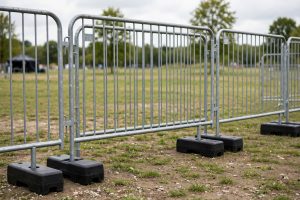
When wind lifts the sign, the frame comes up out from under the bag while the bag never moves. It did not fail in any way that shows, because it was never connected to anything. This is a geometry problem and no amount of better sand fixes it, since the weight has to grip the base rather than rest near it. The Stand Box handles this with dual channels molded into the bottom that fit over the feet of temporary road signs and fencing, so the weight drops onto the foot and locks on, and the sign and the weight move as one piece, which means neither one moves.
Reason Three: There Is Not Enough Weight for the Sign
Sometimes the answer is boring and the sign is simply too big for what is holding it. A large sign face is a large sail, and a roll-up on a portable stand catches more air than most crews credit, while a framed sign at highway speed takes a hit every time a truck passes. Thirty pounds handles most standard stands in normal conditions, and it does not handle every sign in every wind.
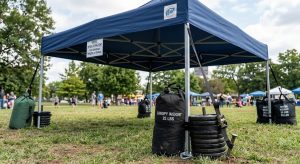
The fix is to add weight, and the trick is being able to add it in a way that stays added. Stacking sandbags does not work well, since they slide off each other and the pile comes apart under the first load that hits it. Solid weights with interlocking knobs on top and matching holes on the bottom stack and lock together, so sixty pounds is still sixty pounds when the gust arrives.
Reason Four: The Ground Is Working Against You
Look at what the sign is standing on, because the ground sets the ceiling on everything else. Sloped shoulders put the frame off level, and an off-level sign loads one foot more than the others. Loose gravel lets the feet skate sideways under load. Fresh grade and soft dirt let them sink unevenly, which tilts the face into the wind and makes the problem worse over time. Wet ground turns to slick mud and everything on it slides.
None of that is a weight failure exactly, but weight is how you fix it. Get the base as level as the site allows and put the mass where the load is actually landing rather than spreading it evenly out of habit.
Reason Five: Water Got Involved
Standing water is where the whole system gives up at once. A sandbag with any air space inside it floats, and a soaked one slides on wet pavement, and either way the sign is loose in exactly the conditions where a loose sign in a roadway is most dangerous.
If your signs go down during storms and stay up the rest of the time, water is the answer and the fix is a weight that does not float. Solid rubber stays put on a flooded shoulder, because there is no air inside it and nothing for the water to lift.
Reason Six: Traffic, Not Weather
Crews blame wind for things that traffic did. A truck passing at speed drags air behind it and pulls at everything on the shoulder, and on a busy road a sign takes that hit hundreds of times in a single shift. It is smaller than a storm gust and it never stops, which works a sign loose over the course of days rather than seconds.
If your signs fall on calm days, this is usually why. The fix is the same as it is for wind, which is enough mass, locked to the base.
The Fix Most Crews Land On
Work through the list and the same two requirements keep surfacing. The weight has to actually weigh what you think it weighs, and it has to be connected to the sign. Sandbags struggle with both by design, since they are fabric sacks full of loose material that drape rather than grip, and they lose mass invisibly while looking exactly the same.
Solid weights remove both problems at once. The Stand Box is 30 pounds of compressed recycled rubber with nothing inside it to leak, so it weighs 30 pounds on day one and 30 pounds years later, wet or dry. The molded base channels fit over sign feet so the weight grips the frame, it will not float, it does not rot, and there is nothing to refill or top off. A molded handle means one person sets it in place in seconds and moves on.
A Short Checklist
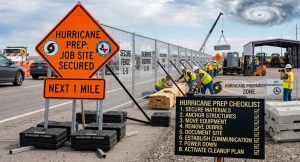
Next time a sign goes down, run through this before you reset it. Check the weight of the weight rather than trusting how it looks, and check that the weight is sitting on the foot rather than beside it. Check the sign face against what is holding it and add mass if it is undersized. Check the ground for slope, gravel, and soft spots, then check for standing water and look at how much traffic is passing and how fast.
Most of the time the answer is somewhere on that list, and most of the time it is one of the first two items.
Looking Ahead
Signs do not fall over for mysterious reasons. They fall because the weight got lighter without anyone noticing, or because the weight was never gripping the base to begin with, and everything else is a distant third.
Fix those two and the sign stays up. Keep resetting it every Monday and you are paying for the same failure on a schedule.