
A sandbag that bursts is annoying. A sandbag that leaks is dangerous, and the difference between them is that only one announces itself.
Leaking is the failure crews miss, because it looks like nothing at all. The bag is still there, the sign is still up, and the site looks exactly the way it looked when the crew set it. Meanwhile the weight holding your work zone together has been quietly draining out for months. Here is how it happens, why nobody catches it, and how to find out where you stand.
How the Leak Starts
Sand does not escape a bag on its own, so something has to open a path, and on a job site there are plenty of candidates for the job.
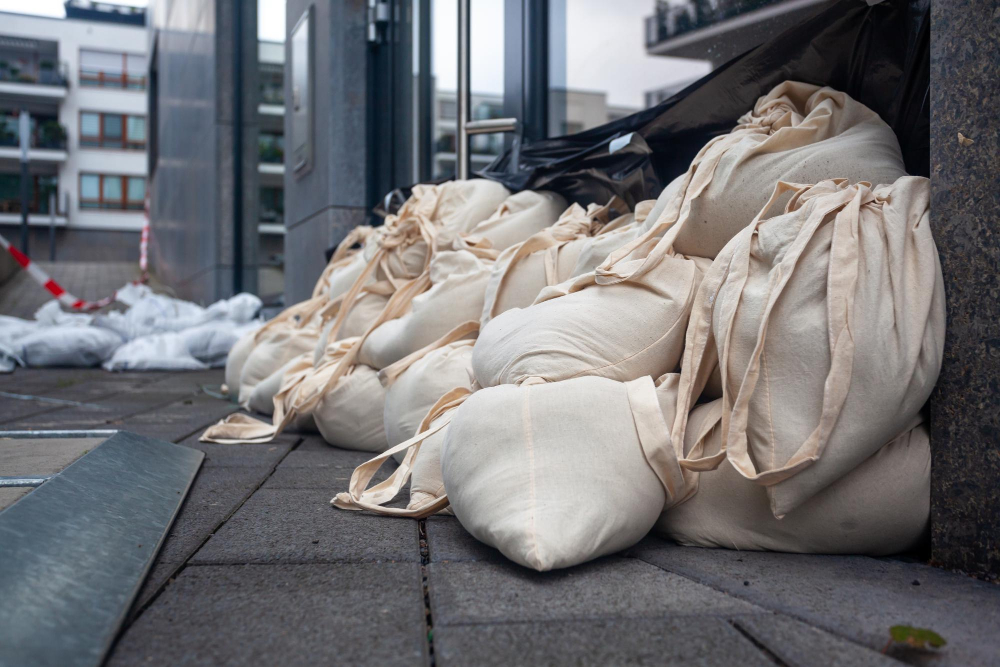
The most common is abrasion at the contact point. A bag on a sign foot is not sitting still, since every gust rocks the sign and the fabric grinds against a metal edge, a weld seam, or a bolt head underneath it. Woven polypropylene does not take that for long, so the weave opens at the pressure point, threads part, and a hole starts where nobody is looking. The ground does the same work from the other side, since gravel, broken asphalt, and fresh grade all cut, and so does dragging a bag across a lot during setup, which most crews do without thinking about it.
Sun helps the process along. UV exposure makes polypropylene brittle, so a bag that has been out for a season tears where a fresh one would have flexed. None of this produces a dramatic opening. It produces a small hole in a spot nobody inspects, usually on the underside where the bag meets the base.
Why the Leak Is Slow
This is the part that makes it dangerous rather than merely expensive. Sand does not pour out of a small hole in a bag that is lying flat and packed, it works its way out gradually. A little escapes when the bag shifts, a little more when the sign rocks, and rain washes some of it through, so the rate is measured in ounces a day rather than pounds.
The bag empties on a timescale of weeks and months, and because it is fabric, it slumps as it loses volume rather than staying full-sized and obviously light. It keeps its shape against the sign foot and it still looks like a sandbag doing its job. A bag that held 40 pounds in March is holding 25 by August, and from ten feet away, in a truck, driving past, those two bags are identical.
Why Nobody Catches It
Crews are not careless, and this failure is built to be missed. There is no alarm attached to it, since nothing about a leaking bag announces itself. There is no drip and no noise, and there is no obvious pile of sand either, because the sand goes into the dirt or gets washed away by the next rain.
There is also no reason to check. The sign is standing, and on a site with a hundred things demanding attention, a sign that is up is a solved problem. Nobody walks a work zone lifting sandbags to feel how heavy they are.
The feedback loop is broken as well. If the bag failed visibly on the day it started leaking, crews would learn the lesson immediately and adjust. Instead the bag leaks for five months and then a sign goes down on a windy Tuesday, and the failure gets blamed on the wind. The wind takes the blame for a great deal of work that a leak actually did.
What the Leak Actually Costs
The sign goes down in a live lane, and what happens next depends entirely on the day. In the best case somebody calls it in, a crew rolls out and resets it, and the only cost is the callout plus the hours. In the middle case an inspector sees an out-of-compliance work zone. In the worst case it becomes a claim, because a driver hit the device or hit something that was supposed to be marked and was not.
The uncomfortable part is that nobody did anything wrong that anyone would recognize at the time. The crew set the sign correctly, the weight was on it, and the paperwork was right. The bag had been failing since spring and gave no indication of it. That is what makes leaking different from every other failure on the list, since it is not a maintenance problem so much as a visibility problem.
How to Find Out Where You Stand
If you are running sandbags, here is how to get an honest picture rather than an assumed one.
Start by picking up a sample rather than looking at it. Take ten bags from a site that has been running a few months and heft each one, because you already know what a full bag feels like, and the ones that feel light are light and have been for a while. Weigh a few if you want the real number, since a cheap luggage scale or a bathroom scale settles the argument in about a minute and the result usually ends any debate about how real the problem is.
Turn a bag over and look at the underside, because that is where the abrasion happens and that is where the hole will be. A bag that looks fine from the top is often worn through underneath where nobody has occasion to look. Check the ground under the sign feet as well, since on a site where bags have been leaking there is usually a little sand worked into the dirt around the base.
Do this once and you will know if your weights are what you think they are, which is more than most crews running sand can say.
What Fixes It
The leak traces back to two facts about a sandbag. It is made of fabric, and it holds loose material. Fabric opens up, and loose material leaves through the opening.
Better fabric slows the process without stopping it. UV-treated bags last longer than untreated ones, and a heavier weave lasts longer than a light one, but none of it removes the failure. It only moves the date further out. The fix that removes the failure entirely is a weight with nothing inside it.
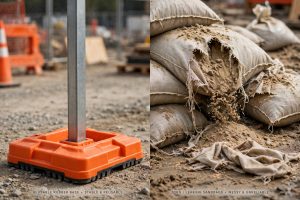
The Stand Box is 30 pounds of solid compressed recycled rubber with a 4% compound, and it is one piece of one material. There is no fabric to wear through, no weave to open, no seam to split, and nothing inside that could leave, so it weighs 30 pounds the day it arrives and 30 pounds years later, wet or dry, in sun or frost. The practical version of that is you stop needing to check, since there is no inspection step, no scale, and no lifting bags to see how they feel. A weight that cannot lose mass cannot lose mass while nobody is looking.
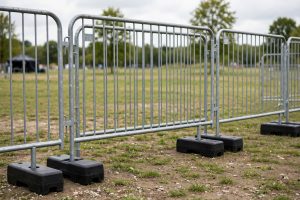
The base also has dual channels molded into it that fit over the feet of temporary road signs and fencing, so the weight grips the frame rather than resting near it. That solves the other half of the problem, which is bags sliding off the base even while they are still full.
Final Word
Sandbags do not usually fail loudly. They fail quietly, over months, while the site looks correct and everybody has more urgent work in front of them.
The bag is not hiding anything on purpose. It simply has no way to tell you what it weighs, and neither does anyone driving past it at forty miles an hour. If you are running sand, go lift ten bags this week, because the number will tell you what to do next.