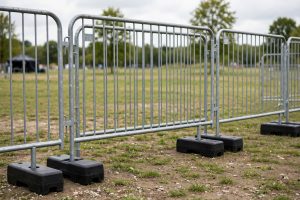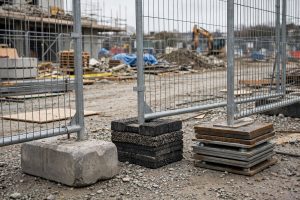

Temporary fencing can become unstable quickly when wind increases, especially on open construction sites, parking areas, event grounds, and other exposed locations. The problem is not simply that the fence needs to be “heavier.” Wind stability depends on the fence panel, base, ballast, connections, ground conditions, and overall configuration working together.
If you want to know how to secure temporary fencing in high wind without sandbags, the most practical approach is to use stable fence bases, appropriate reusable ballast, secure panel connections, firm ground, and regular inspections. Reusable solid weights can replace loose sandbags while providing consistent ballast for repeated temporary installations.
How to Secure Temporary Fencing in High Wind (Without Sandbags)? — Short Answer
To secure temporary fencing in high wind without sandbags, use an appropriately designed base and reusable ballast, connect fence panels securely, keep the center of gravity low, place the fence on stable ground, and inspect the installation after strong wind.
The correct stabilization method depends on fence height, panel size, privacy screening, wind exposure, fence layout, ground conditions, and installation duration.
Removing sandbags does not mean eliminating ballast. It means choosing a more durable and consistent stabilization method.
How to Secure Temporary Fencing in High Wind (Without Sandbags) Safely
High winds can cause three different problems: a fence can tip over, slide across the ground, or separate at its connections. A heavier object may help with one problem but cannot compensate for a poorly connected or poorly positioned fence.
For particularly exposed or high-risk installations, follow the fencing manufacturer’s specifications and use an engineered stabilization or anchoring solution when required.
Why Does Temporary Fencing Blow Over in High Wind?
Wind Pressure on Temporary Fence Panels
Wind pushes against the exposed surface of a fence. Solid privacy panels generally experience greater wind exposure than open mesh because less air can pass through them.
As exposed surface area increases, the forces acting on the temporary fence can increase as well.
Fence Height and Wind Load
Tall fencing creates more leverage against its base. Wind acting higher above the ground can produce a greater overturning effect, which is why fence height and mounting configuration matter when selecting ballast.
Fence Panel Layout and Wind Exposure
A long uninterrupted fence line, corner, gate, or exposed end panel can behave differently from a short section. Changes in direction can also alter how wind interacts with the fence.
Weak or Unstable Base Supports
Narrow, damaged, poorly positioned, or undersized fence feet can reduce stability. Base geometry matters because a stable footprint helps resist tipping.
Poor Panel-to-Panel Connections
Loose clamps, missing connectors, and misaligned panels can allow individual sections to move independently. A strong base cannot fully compensate for weak connections.
Ground Conditions
Concrete and asphalt generally provide more predictable support than loose gravel, soft dirt, or uneven grass. Construction sites can be particularly challenging because ground conditions may change throughout a project.
What Makes Temporary Fencing Stable in High Wind?
Adequate Ballast
Ballast increases resistance against movement, but there is no universal weight that works for every temporary fence. A 6-foot solid privacy panel in an exposed location has different stabilization requirements from a smaller mesh panel in a sheltered area.
A Wide and Stable Base
A wider footprint can improve resistance to tipping. Weight distribution and a low center of gravity are also important.
Strong Fence Connections
Use the correct clamps, couplers, brackets, and attachment hardware. Inspect every connection rather than assuming connected panels are automatically secure.
Proper Fence Positioning
Where practical, consider wind direction, exposure, fence orientation, and unsupported sections. Do not compromise required access, visibility, or safety simply to reduce wind exposure.
How to Secure Temporary Fencing in High Wind (Without Sandbags) Step by Step
Step 1: Identify the Type and Size of Temporary Fence
Determine the fence height, panel width, mesh or solid construction, privacy screening, and number of connected panels. These characteristics affect wind exposure.
Step 2: Assess the Wind Exposure
Consider open construction sites, parking lots, elevated areas, exposed properties, and locations where strong gusts are expected. Wind conditions can change rapidly.
Step 3: Inspect the Fence Base
Check the fence feet, supports, ground contact, and condition of the components. Replace damaged bases before relying on them for stabilization.
Step 4: Select an Appropriate Sandbag Alternative
Common alternatives include reusable solid weights, water-filled bases, engineered temporary-fence bases, and suitable anchoring systems.
For contractors repeatedly installing temporary fencing, reusable solid weights can be particularly useful because they provide consistent ballast without the deterioration and handling issues associated with loose sandbags.
Step 5: Secure Every Fence Connection
Attach panels correctly and inspect clamps and connectors. Minimize unnecessary movement between adjacent panels.
Step 6: Distribute Ballast Correctly
Position weight according to the stabilization system’s design. Avoid placing ballast where it creates an unstable or uneven configuration.
Step 7: Inspect the Complete Fence Line
Check individual panels, corners, gates, bases, connections, and signs of leaning or movement.
Step 8: Reinspect After Strong Wind
After severe weather, look for shifted bases, loose connections, bent panels, and damaged components. Reassess the entire fence line if conditions have changed.
Best Sandbag Alternatives for Securing Temporary Fencing
Reusable Solid Weights
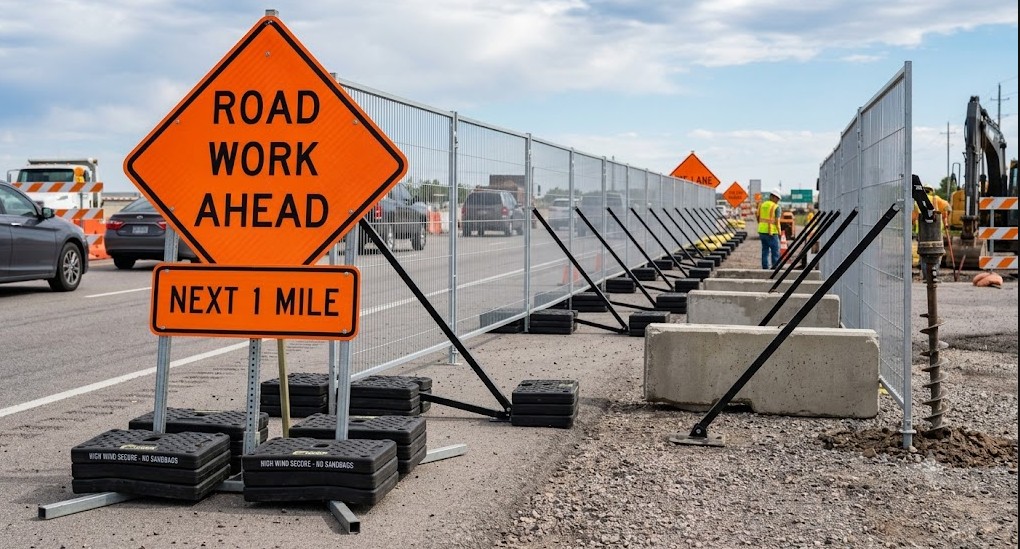
Reusable weights offer consistent ballast and are designed for repeated deployment. Unlike sandbags, purpose-built solid weights are not dependent on a flexible bag remaining intact.
They can be especially practical for construction companies and crews that install, move, and remove temporary fencing regularly.
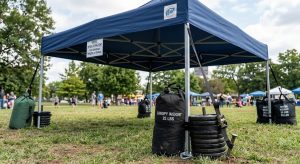
The Stand Box is an example of a reusable weight solution designed to help contractors and site teams replace loose, disposable ballast with durable reusable weights for temporary outdoor equipment. The value is not simply the weight itself, but the consistency and repeatability of the stabilization system.
Water-Filled Bases
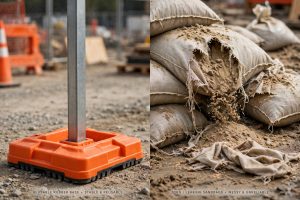
Water-filled bases can be relatively easy to transport before filling and reused across temporary installations. However, cold weather, leaks, storage, and transportation requirements should be considered.
Engineered Temporary Fence Bases
Purpose-designed bases can provide a predictable footprint and connection between the fence panel and stabilization system. Always follow the manufacturer’s specifications for the particular fence system.
Ground Anchoring Systems
Anchoring may be appropriate where site conditions and the fence system allow it. Anchoring and ballast are different approaches and should not be treated as interchangeable.
Permanent or Semi-Permanent Foundations
Foundations can provide substantial stability but sacrifice portability. They are generally more appropriate for installations intended to remain in place for longer periods.
Temporary Fence Stabilization Methods Compared
| Method | High-Wind Potential | Portability | Reusability | Best Use |
|---|---|---|---|---|
| Sandbags | Moderate | Moderate | Low–Moderate | Short-term setups |
| Water-filled bases | Moderate–High | Moderate | High | Portable applications |
| Reusable solid weights | High* | High | High | Repeated deployments |
| Engineered fence bases | High* | Moderate–High | High | Temporary fencing |
| Ground anchors | Application-dependent | Low–Moderate | Varies | Suitable ground conditions |
| Permanent foundations | Very High* | Low | N/A | Long-term installations |
*Actual wind performance depends on the complete fence system, ballast, installation, manufacturer specifications, and site conditions.
Sandbags vs. Reusable Temporary Fence Weights
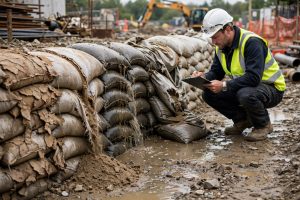
Sandbags can be inexpensive and readily available, but repeated exposure to moisture, dragging, lifting, and outdoor conditions can make them less convenient over time.
Reusable weights can provide more consistent ballast, easier inventory management, better durability, and a cleaner deployment process.
For crews that install temporary fencing across multiple projects, the difference becomes especially important because stabilization equipment may be handled dozens or hundreds of times.
How Much Weight Does Temporary Fencing Need in High Wind?
Is There a Universal Weight Requirement?
No. Required ballast depends on fence height, panel dimensions, wind conditions, exposure, base footprint, connections, and ground conditions.
Does Solid Privacy Fencing Need More Stabilization?
Often, yes. Solid screening presents a larger uninterrupted surface to wind and allows less airflow through the panel than open mesh.
Does Mesh Temporary Fencing Perform Differently?
Mesh allows more airflow through the fence, but it is not automatically windproof. Its stability still depends on its dimensions, base, connections, and site conditions.
Does Fence Height Affect Required Ballast?
Yes. Taller fencing can increase leverage and the overturning effect created by wind.
Is More Weight Always Better?
Not necessarily. Stability also depends on footprint, weight distribution, ground contact, structural strength, transportation, and handling.
How Wind Conditions Affect Temporary Fence Stability
Wind Speed and Gusts
Strong gusts can create short periods of substantially greater loading than normal conditions. Temporary fencing should be evaluated for expected weather rather than only calm-day performance.
Open vs. Sheltered Locations
Buildings, trees, and surrounding structures can affect local wind exposure. Open construction sites and parking areas may expose fencing to stronger and more direct wind.
Fence Orientation
The direction of the fence relative to incoming wind can affect the amount of exposed surface.
Fence Length and Configuration
Long fence runs, corners, gates, and end panels can behave differently and should be inspected individually.
Common Mistakes When Securing Temporary Fencing in High Wind
Relying Only on Sandbags
Sandbags are only one stabilization option and may become difficult to handle or maintain during repeated outdoor use.
Using Insufficient Ballast
A generic weight recommendation may not account for the actual fence size, wind exposure, or base configuration.
Ignoring Fence Connections
Loose clamps and missing connectors can allow panels to move even when their bases are adequately weighted.
Placing Fence on Unstable Ground
Soft soil, loose gravel, and uneven surfaces can reduce stability.
Installing Privacy Screening Without Considering Wind
Privacy screening increases exposed surface area and may significantly change the wind behavior of a temporary fence.
Failing to Inspect After Severe Weather
Wind can shift ballast, loosen connections, damage feet, and move panels. Post-storm inspection is essential.
How to Keep Temporary Fence Panels From Tipping Over
Use Stable Fence Feet
Choose an appropriate footprint and make sure each base is positioned correctly and remains in good condition.
Add Appropriate Ballast
Match the stabilization system to the complete fence configuration and distribute weight properly.
Connect Adjacent Panels
Secure panels with the correct clamps or couplers to reduce independent movement.
Reduce Unnecessary Wind Exposure
Where practical, consider site layout and avoid unnecessarily exposed unsupported sections.
Monitor the Fence During Severe Weather
Inspect before and after major weather events and remove or secure compromised panels.
Temporary Fence Stabilization for Construction Sites
Construction sites frequently combine open exposure, heavy equipment, changing ground conditions, and temporary installations that must be relocated.
Long perimeter fences require particular attention at corners, gates, access points, and end panels. Privacy or dust-control screening can increase wind loading and may require stronger stabilization than standard mesh.
For repeated projects, reusable stabilization can reduce the dependence on disposable ballast and make deployment more consistent.
How to Choose the Right Sandbag Alternative for Temporary Fencing
Consider Fence Type
Evaluate whether the installation uses mesh, chain-link temporary panels, solid panels, or privacy screening.
Consider Wind Exposure
Account for expected wind, site exposure, seasonal weather, and potential gusts.
Consider Installation Duration
A one-day event may have different logistical requirements from a temporary perimeter remaining in place for several weeks.
Consider Mobility
If crews move fencing daily, handling and transportation become important. If the fence remains fixed, a heavier or more substantial stabilization system may be practical.
Consider Durability and Storage
Evaluate outdoor durability, repeated handling, transportation requirements, and storage footprint.
For contractors and businesses that repeatedly deploy temporary fencing, barricades, and other outdoor equipment, The Stand Box provides a reusable approach to stabilization that can be considered when replacing traditional loose ballast with a more consistent weight system.
What Happens If Temporary Fencing Is Not Properly Secured?
Fence Panels Can Tip or Collapse
One unstable panel can affect adjacent connected panels, creating a chain reaction along part of a fence line.
Panels Can Block Access Routes
A displaced fence can obstruct pedestrian routes, construction entrances, vehicle paths, or designated work areas.
Fencing Can Damage Nearby Equipment
Falling panels may contact vehicles, equipment, temporary structures, or other site infrastructure.
Damaged Fencing Can Increase Labor and Replacement Costs
Repeated repositioning, repairs, inspections, and component replacement can increase the total cost of maintaining a temporary perimeter.
High-Wind Temporary Fencing Safety Checklist
- Check fence height and panel type
- Assess expected wind conditions
- Inspect fence feet and bases
- Use appropriate ballast
- Secure all panel connections
- Distribute weight correctly
- Place fencing on stable ground
- Account for privacy screening
- Inspect corners and end panels
- Recheck after strong winds
- Replace damaged components
- Follow manufacturer recommendations
Frequently Asked Questions About Temporary Fencing in High Wind
How to Secure Temporary Fencing in High Wind (Without Sandbags)?
Use an appropriate reusable ballast or engineered base, secure every fence-panel connection, maintain stable ground contact, and account for fence height and wind exposure. Inspect the complete installation after strong winds and follow the fence manufacturer’s stabilization requirements.
What can I use instead of sandbags for temporary fencing?
Reusable solid weights, water-filled bases, engineered temporary-fence bases, and suitable anchoring systems can serve as alternatives. The correct option depends on the fence design, wind exposure, ground conditions, and installation requirements.
How much weight does temporary fencing need in high wind?
There is no universal weight. Required stabilization depends on fence height, panel dimensions, wind exposure, base design, ground conditions, and the complete installation configuration.
Are sandbags necessary for temporary fencing?
No. Sandbags are one traditional ballast option, but reusable solid weights, water-filled systems, engineered bases, and other stabilization methods may be appropriate alternatives.
How do you stop temporary fence panels from blowing over?
Use stable fence feet, appropriate ballast, secure panel connections, firm ground, and regular inspections. Solid privacy panels may require additional consideration because they can experience greater wind exposure.
Does privacy screening make temporary fencing more vulnerable to wind?
It can. Privacy screening increases the amount of surface exposed to wind and can reduce airflow through the fence. The added wind exposure should be considered when selecting stabilization.
Can temporary fencing withstand strong winds?
It depends on the fence system, panel type, base, ballast, connections, ground conditions, and wind exposure. There is no single wind-speed threshold that applies to every temporary fence.
What is the best base for temporary fencing in high winds?
There is no universal best base. Reusable solid weights, water-filled bases, engineered systems, and anchors each have different applications. Selection should be based on the complete fence configuration and site conditions.
How do you secure temporary fencing on uneven ground?
Use a suitable base configuration, maximize stable ground contact, prepare the installation area where practical, and follow manufacturer guidance. Uneven or soft ground may require a different stabilization approach from level concrete or asphalt.
Conclusion: How to Secure Temporary Fencing in High Wind Without Sandbags
The best way to secure temporary fencing in high wind without sandbags is to treat stabilization as a complete system rather than simply adding weight.
Start with stable fence bases, appropriate ballast, secure panel connections, firm ground, and proper positioning. Then consider fence height, panel type, privacy screening, wind exposure, fence layout, and installation duration.
Most importantly, removing sandbags does not mean removing stabilization. Reusable solid weights and engineered temporary-fence bases can provide practical alternatives when crews need consistent, durable stabilization across repeated deployments.
For construction companies, traffic-control crews, event operators, and businesses that regularly install temporary fencing or other outdoor equipment, The Stand Box offers a reusable weight-based approach worth considering when a more durable alternative to loose sandbags is needed.