

Temporary traffic signs have to remain visible, upright, and in the correct position even when outdoor conditions change. Wind is one of the biggest challenges because a sign can tip, slide, shift, or become displaced when its base does not provide enough stability.
So, how to keep temporary traffic signs from blowing over? The most reliable approach is to use appropriate ballast, a stable and sufficiently wide base, firm ground, proper positioning, secure connections, and regular inspections. The right setup depends on the sign’s size, mounting height, wind exposure, base design, and expected weather conditions.
To keep temporary traffic signs from blowing over, use a suitable ballast or weight system matched to the sign and expected wind conditions. Position the sign on firm, level ground, use a stable base with a low center of gravity, secure all connections, and inspect it after strong winds.
There is no universal weight that works for every traffic sign. A large sign mounted high above the ground can experience substantially more wind force than a small sign mounted close to the base.
Strong gusts can overwhelm a setup that appears stable during normal weather. Wind force increases significantly as wind speed increases, so exposed construction sites, roads, parking areas, and other open locations deserve particular attention.
Larger signs also present more surface area to the wind. During severe weather, inspect temporary signs and stabilization equipment rather than assuming an installation that was stable earlier will remain stable.
Wind pushes against the exposed surface of a sign. The larger the sign face, the more area there is for wind to act against. A large temporary traffic sign therefore may require considerably more stabilization than a smaller sign.
Mounting height also affects stability. Wind acting against a sign positioned higher above the ground creates greater leverage against the base. Keeping the center of gravity low can improve resistance to overturning.
If the base is too light for the sign configuration and wind conditions, the sign may tip or slide. Adding appropriate ballast can increase resistance, but selecting an arbitrary amount of weight is not a reliable method because every installation is different.
Total weight is only one part of the stability equation. Base footprint, ground contact, weight distribution, and center of gravity all influence how effectively a sign resists movement.
Grass, loose gravel, dirt, and uneven construction surfaces can make stabilization more difficult. Even a properly weighted sign may become unstable if its base cannot maintain consistent contact with the ground.
Wind conditions can change quickly. Temporary installations should be checked periodically, particularly after strong gusts or severe weather.
Ballast should be selected according to the complete sign configuration. Consider sign dimensions, mounting height, wind exposure, and base design rather than relying on a generic weight recommendation.
A wider footprint can improve resistance to tipping. Balanced weight distribution and a low center of gravity can also help keep the installation stable.
Whenever possible, use stable ground that provides consistent contact with the base. Avoid positioning temporary signs where soft or uneven surfaces can compromise stability.
Inspect poles, brackets, fasteners, and attachment points. A heavy base cannot compensate for a weak connection between the sign and its support system.
Look for leaning, shifted ballast, loose connections, damaged components, or movement from the original position. Re-stabilize the installation before continuing to use it.
Record the sign’s width, height, mounting height, and number of panels. These characteristics affect wind exposure.
Consider whether the sign is in an open area, exposed work zone, parking lot, or relatively sheltered location. Account for potential wind gusts rather than relying only on average conditions.
Evaluate the base’s width, length, ground contact, and overall stability before adding ballast.
Compare stabilization options and select one suitable for the sign and application. If crews frequently move signs, portability and repeated handling should also influence the decision.
Place the sign on firm, level ground and avoid unnecessary wind exposure where practical without compromising its required visibility or placement.
Check the sign-to-base connection, ballast placement, ground contact, and any signs of leaning or movement.
Strong winds can change ground contact or shift ballast. Inspect the installation again and replace damaged components when necessary.
| Method | Wind Stability | Portability | Reusability | Durability | Best For |
|---|---|---|---|---|---|
| Sandbags | Moderate | Moderate | Low–Moderate | Moderate | Short-term setups |
| Water-filled bases | Moderate–High | Moderate | High | Moderate | Portable applications |
| Reusable solid weights | High | High | High | High | Repeated deployments |
| Permanent foundations | Very High | Low | N/A | Very High | Permanent signs |
Actual performance depends on sign size, wind conditions, installation method, base geometry, and ground conditions.
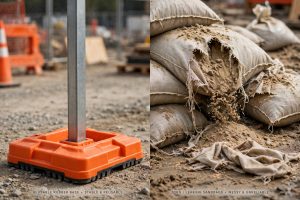
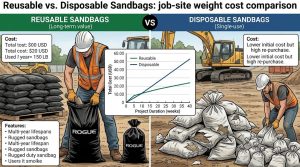
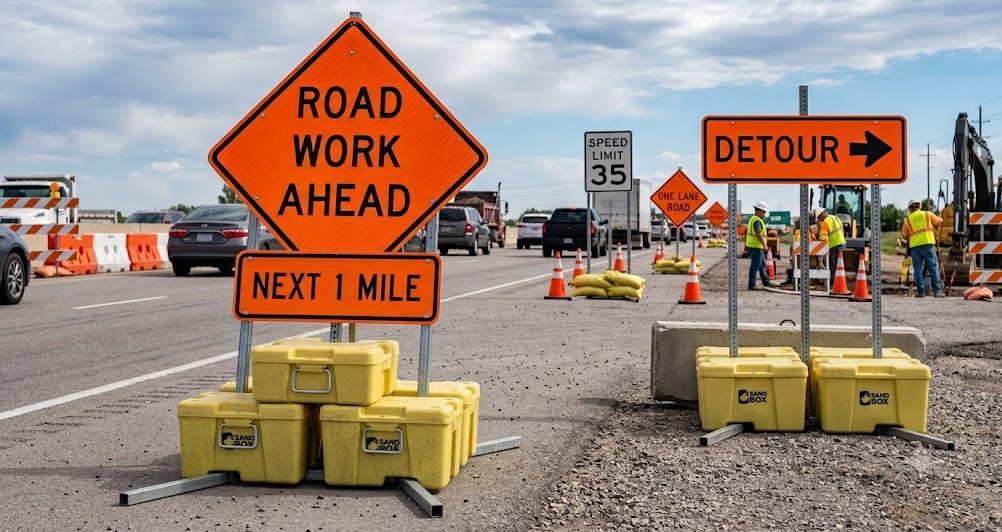
Sandbags can provide inexpensive temporary ballast, but they may shift, tear, absorb moisture, and become inconvenient to store and transport. Reusable solid weights provide consistent ballast and can be more practical for crews that repeatedly install and relocate traffic-control equipment.
For example, The Stand Box provides reusable weight solutions for temporary construction and traffic-control applications, offering an alternative to relying exclusively on disposable or loose ballast.
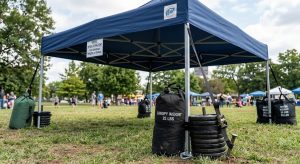
Reusable weights can simplify repeated deployment because the ballast remains consistent from one installation to another. They can also reduce dependence on materials that deteriorate through repeated outdoor exposure.
No. Required ballast depends on the sign’s dimensions, height, wind exposure, base configuration, and ground conditions.
Yes. Larger signs expose more surface area to wind and can create greater overturning forces.
Yes. Higher wind speeds and strong gusts can substantially increase the force acting on a sign.
Not necessarily. A heavier base may improve stability, but footprint, geometry, center of gravity, portability, and ground contact are also important.
Construction sites can have open exposure, changing ground conditions, frequent sign relocation, and nearby workers or equipment. A durable stabilization system is particularly useful when signs must be moved repeatedly.
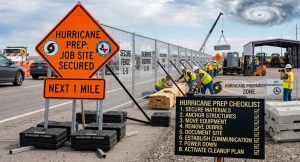
Work-zone signs need to remain in their intended position around vehicles and workers. Regular inspection is important because displacement can reduce their effectiveness and create additional hazards.
Temporary signs used for parking or events need to balance stability with easy setup and teardown. Portable reusable weights can be useful when installations change frequently.
Large signs require greater attention to surface area, mounting height, wind exposure, and base design.
Smaller signs generally have less exposed surface area, but they can still move in strong winds if insufficiently stabilized.
A lightweight base may not provide enough resistance for the actual sign and weather conditions.
Cracks, leaks, deformation, or worn components can reduce the reliability of a stabilization system.
Uneven surfaces can reduce ground contact and increase the likelihood of shifting.
Higher mounting positions can increase leverage and overturning potential.
Ballast can shift, connections can loosen, and ground conditions can change after strong weather.
Weight alone does not determine stability. Base geometry, footprint, center of gravity, and installation conditions also matter.
Higher wind speeds and sudden gusts increase wind loading.
More exposed surface area generally means greater wind force.
Wind direction and local exposure can affect how much pressure reaches the sign.
Higher signs create greater leverage against their bases.
Asphalt, concrete, gravel, dirt, and grass can provide different levels of stability and ground contact.
Evaluate width, height, number of panels, and mounting configuration.
Account for normal conditions as well as potential strong winds and gusts.
A one-time temporary installation has different handling requirements from signs that crews relocate every day.
Weight systems should be practical for the available vehicles, crew, storage space, and handling process.
Repeated outdoor exposure requires equipment capable of handling weather and frequent deployment.
For companies that repeatedly deploy temporary signs, barricades, and outdoor equipment, The Stand Box offers reusable stabilization solutions designed around repeated use rather than one-time ballast deployment.
A displaced sign can enter an area used by vehicles, pedestrians, or workers.
Falling or moving signs can contact barriers, fencing, vehicles, and temporary structures.
Movement can take a sign away from its intended position, reducing the effectiveness of traffic communication.
Constant repositioning can require additional labor and may contribute to equipment damage or premature replacement.
Use adequate ballast, a stable base with an appropriate footprint, firm ground, secure connections, and proper positioning. Inspect temporary traffic signs after strong winds and adjust the stabilization system if conditions or the installation change.
There is no universal weight. The appropriate ballast depends on sign dimensions, mounting height, wind exposure, base design, and ground conditions.
The best method depends on the installation. Options include sandbags, water-filled bases, reusable solid weights, or permanent foundations where appropriate.
Sandbags can provide temporary ballast, but their effectiveness depends on the sign and conditions. They may also shift, tear, absorb moisture, and become difficult to handle over repeated deployments.
Yes. Strong wind can cause a temporary sign to tip, slide, or shift when the installation does not provide adequate resistance.
There is no universal best base. The appropriate choice depends on wind conditions, sign configuration, portability requirements, ground conditions, and how frequently the sign will be moved.
Use a stable base, maximize reliable ground contact, select appropriate ballast, and inspect the installation carefully. Where possible, choose a more stable placement surface.
There is no single wind-speed rating applicable to every temporary traffic sign. Wind resistance depends on the complete sign, support, ballast, base, and installation configuration.
Yes, temporary signs commonly require appropriate stabilization to resist movement from wind and other environmental forces. The amount and method should match the installation.
Reusable weights can be advantageous for repeated deployments because they offer consistent ballast, durability, easier storage, and reduced reliance on disposable materials. However, the right option depends on the specific application.
Knowing how to keep temporary traffic signs from blowing over starts with understanding that stability is not determined by weight alone. Sign size, mounting height, wind speed, surface area, base footprint, center of gravity, ground conditions, and installation quality all work together.
For reliable temporary traffic-control setups, use appropriate ballast, a stable base, firm ground, secure connections, and regular inspections. Avoid relying on a generic weight recommendation because every sign configuration and environment is different.
For construction companies, traffic-control crews, event operators, and other organizations that repeatedly deploy temporary signs and outdoor equipment, reusable stabilization systems can make setup, transportation, and maintenance more consistent. The Stand Box is one option to consider when a durable, reusable approach to temporary sign and equipment stabilization is needed.