
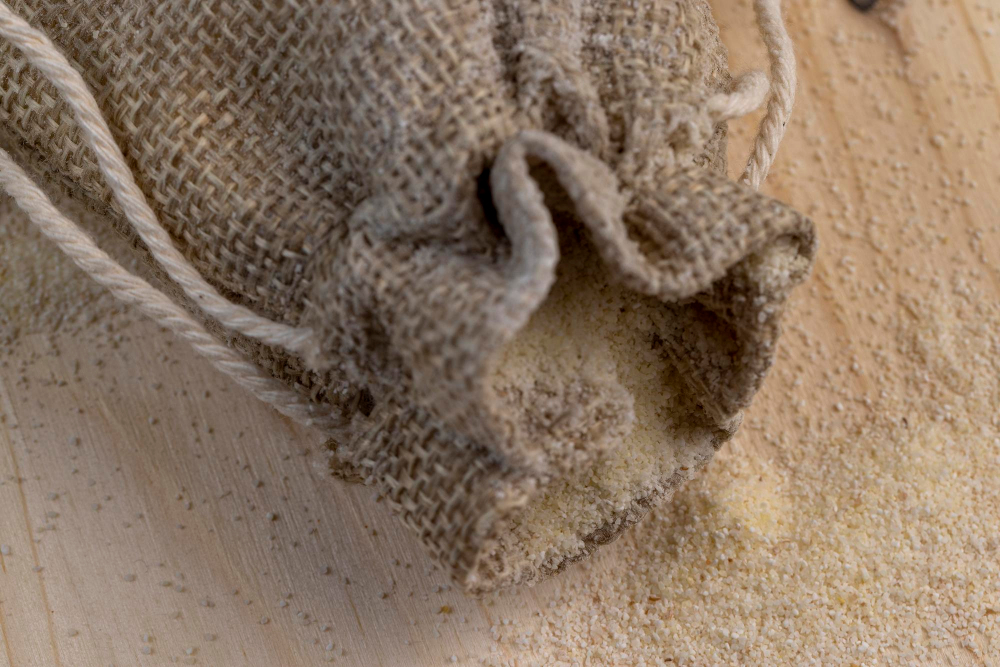
Every shop that runs sandbags has a pile behind the yard. Split bags, empty bags, bags with a corner torn off, and bags nobody has decided to throw away yet. It is the most honest thing on the property, because it is a running record of exactly how much of the budget goes into buying the same item over and over again.
Bags break, and that is neither a defect nor bad luck. It is what happens when you fill fabric with 40 pounds of rock and leave it outside on a job site. Here is when it happens, where it happens, and what it costs to keep pretending it will not.
Breaking Is Different From Leaking
These two are worth separating, because they are different failures with different consequences. A leak is slow and invisible, since the bag stays intact and quietly gets lighter over months while nobody notices, and the sign goes down later with no warning attached to it.
A break is sudden. The bag splits, the seam opens, or the corner tears off, and the sand is on the ground immediately where anyone can see it. Breaking is the safer of the two, oddly enough, because at least it announces itself and the crew knows the weight is gone and can do something about it. The problem with breaking is not danger, it is cost, because a broken bag is a bag that has to be bought again.
Where Bags Break
A bag does not fail at a random spot along its surface. It fails at one of four places, and once you know which one you are looking at, you can usually tell what killed it and when.
At the Seam
The seam is the weakest line in the bag and it is under load the entire time the bag is in service. Fill a bag past where it wants to be filled, which everybody does, and the seam carries the difference. Add wet sand, which is heavier than dry, and it carries more than that. Add a freeze on top, and it carries more still until it lets go all at once rather than fraying gradually.
At the Contact Point
The underside of a bag on a sign foot takes constant grinding against a metal edge every time the wind rocks the sign, and that is where the weave opens up. Sometimes it opens slowly and becomes a leak, and sometimes it opens all at once and becomes a break. Barricade duty is the worst of it, since a bigger device catches more wind, rocks harder, and grinds the fabric more with every gust.
In the Crew’s Hands
This is the one that surprises people, and it accounts for a large share of the total. A bag that has been out for a season is brittle from sun exposure, so picking it up by a corner tears the fabric, dragging it across asphalt destroys the underside, and throwing it into a truck bed splits it on the tailgate. A great many bags die during teardown rather than during service, which means the bag survived the entire job and then failed while being put away.
In the Trailer
Wet bags packed into a trailer at the end of a season come out brittle, moldy, and split. They did not break doing work of any kind. They broke sitting still, and every one of them still has to be replaced in the spring.
What Makes Them Break Faster
Sun is the first accelerant, since UV makes polypropylene brittle and a bag that flexed in April will crack in September. Water is the second, because wet sand is heavier than dry sand and the bag ends up carrying more load than it was rated for, while constant wetting and drying works the fibers loose over time.
Freezing is the third and it is the most destructive of them. Wet sand freezes solid and expands, and the fabric holding it is cold, stiff, and unable to stretch out of the way, so the seams open. Run that cycle a dozen times over a winter and the stock is finished before spring arrives.
Overfilling is the fourth, and everybody does it, because a fuller bag holds more weight and the temptation is obvious. Every bit past what the seam was designed for is borrowed against the failure date. Hard surfaces finish the list, since gravel, broken asphalt, and metal edges all cut, and there is no version of a job site that does not have all three.
The Cost of the Replacement Cycle
Here is where this stops being an annoyance and starts being money. Bags get reordered as they tear, and on barricade work that can happen several times a season. Each reorder is small enough that it gets approved without thought and never gets totaled, which is the trick of it, because nobody at any point ever sees a large number.
If you want the real one, pull twelve months of purchase orders and add up every line that says sandbag. Most shops have never done this. The total tends to be larger than anyone guessed, and it does not include the labor to fill the replacements, the fuel to haul the sand, or the dumpster fee for the ones that got thrown out at the end of the season.
Then add the resets. A bag breaking on a live site means a sign is unweighted right now, so a crew stops what it is doing and drives out to deal with it. That labor gets billed to something and produces nothing. None of it appears anywhere under a line called sandbags, since it shows up as general labor, as consumables, as callouts, and as disposal. The reason a dollar-fifty bag survives budget review every year is that nobody has ever seen its actual cost assembled in one place.
What Does Not Break
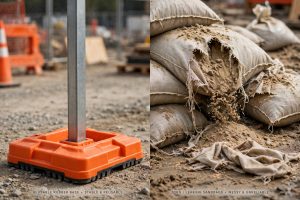
The reason a solid weight ends this cycle is that there is nothing in it to break. The Stand Box is one piece of compressed recycled rubber, 96% recycled material with a 4% compound, molded at 30 pounds. There is no seam, no fabric, and no fill, which means there is no weak line for a load to find and nothing inside pushing outward against anything.
Drop it and it bounces, drag it and it scuffs, throw it into a truck bed and it lands. Leave it out through a winter and it comes back the same, and pack it wet into a trailer for six months and it comes out identical to how it went in, because there is nothing on it that can rot. The material came from tires, which spent their first life on hot asphalt taking impact and abrasion for years, so sitting on a sign foot is the easiest job it has ever had.
There is also a handle molded through the body, which matters more than it sounds. A weight that is easy to carry gets carried, and a great many sandbags break precisely because a bag is awkward to hold and the crew drags it instead.
The Honest Version
Rubber costs more up front, at $44.95 against a dollar or two for a bag, and for a short dry job where nothing is going to break anyway, sand is the cheaper call. That is a real answer and there is nothing wrong with it.
The switch pays when the same crew sets the same signs every week, when the stock lives outside, when the season includes a winter, and when the pile behind the yard keeps growing. In other words, it pays for anyone whose bags are breaking often enough to have noticed. If your bags are not breaking, you do not have this problem. If you have a pile behind the yard, you do.
The Takeaway
Sandbags break at the seam, at the contact point, in the crew’s hands, and in the trailer, and sun, water, frost, overfilling, and hard ground all move the date closer. None of that is fixable, because it is simply what fabric full of loose rock does outdoors over time.
The cost hides because it arrives in small pieces, one reorder at a time, one reset at a time, and one dumpster at a time, spread across line items that nobody ever adds together. Go look at the pile behind your yard, then go pull the purchase orders. The number has been sitting in your books the whole time.