
Sandbags have been used for decades as a simple way to provide temporary weight and stability for construction sites, traffic control equipment, outdoor events, flood protection, and temporary installations. At first glance, they appear to be an affordable and practical solution. However, many businesses discover that the actual cost of using sandbags extends far beyond the initial purchase price.
The question “Why Are Sandbags So Expensive?” becomes more complicated when considering the hidden expenses involved with buying, transporting, storing, replacing, and maintaining them.
For industries that rely on temporary weight solutions regularly, such as construction companies, traffic control providers, event organizers, and municipalities, sandbags can create ongoing operational challenges. The cost is not only in the bag itself but also in labor, handling, durability issues, and repeated replacement.
This guide explains the real costs associated with traditional sandbags and why many organizations are considering reusable weight systems as a more efficient, durable, and long-term solution.
Why Are Sandbags So Expensive? (Short Answer)
Sandbags are expensive because their true cost includes much more than the price of the bag and sand. Businesses must consider:
- Material and manufacturing costs
- Labor required for filling and handling
- Transportation expenses
- Storage requirements
- Weather-related damage
- Replacement frequency
- Cleanup and disposal
A sandbag may seem inexpensive when purchased individually, but repeated use can significantly increase the overall cost. Businesses that use hundreds or thousands of sandbags throughout the year often spend more on labor, maintenance, and replacement than they initially expect.
For companies that regularly need temporary weights, the more important question is not only “How much does a sandbag cost?” but also:
“How much does maintaining a sandbag-based system cost over time?”
What Makes Sandbags More Expensive Than They Appear?
The biggest reason sandbags become costly is that their purchase price represents only a small portion of the total ownership cost. Several hidden factors contribute to their long-term expense.
Material Costs Continue to Add Up
The cost of a sandbag involves more than just the container holding the sand.
Expenses can include:
- Sand supply costs
- Bag manufacturing
- Packaging materials
- Quality control
- Transportation through the supply chain
As material and production costs increase, the price of traditional sandbags can rise as well.
Additionally, businesses often need large quantities for commercial applications. A construction company securing multiple barricades or a traffic control company managing several projects may require hundreds of units, making even small price increases significant.
Labor Costs for Filling and Handling Sandbags
One of the biggest hidden expenses associated with sandbags is labor.
Unlike reusable weight systems that arrive ready for deployment, traditional sandbags often require additional preparation, including:
- Filling bags with sand
- Loading and unloading
- Moving heavy bags around job sites
- Repositioning during projects
- Removing and disposing of damaged bags
For businesses managing multiple locations or large projects, the time employees spend handling sandbags can become a major operational expense.
Labor costs are especially important because the weight of sandbags makes them difficult to move repeatedly. What appears to be a simple weighting solution can become a time-consuming task when workers need to install, adjust, and remove them frequently.
Transportation Costs Due to Weight and Bulk
Sandbags create transportation challenges because they are heavy, bulky, and difficult to move efficiently.
Transportation expenses may increase because of:
- Higher shipping weights
- Increased fuel consumption
- Limited vehicle capacity
- Additional storage space requirements
For contractors traveling between multiple job sites, transporting large quantities of sandbags can reduce efficiency. More space is required in trucks, trailers, or storage areas compared to compact reusable weight solutions.
The heavier the equipment load, the more businesses may spend on moving and handling materials.
Weather Damage Shortens Sandbag Lifespan
Outdoor environments are one of the biggest challenges for traditional sandbags.
Exposure to:
- Rain
- Moisture
- UV sunlight
- Temperature changes
- Dirt and debris
can quickly reduce their effectiveness.
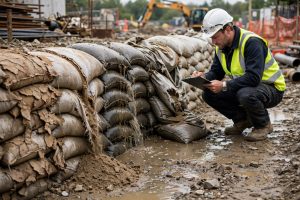
When sandbags absorb water, they become heavier and harder to handle. Over time, moisture can also weaken the material, leading to:
- Torn bags
- Sand leakage
- Reduced stability
- Mold or deterioration
For construction sites, outdoor events, and traffic control applications, weather-related damage can turn a reusable expectation into a frequent replacement expense.
Why Are Sandbags So Expensive? Understanding the Hidden Long-Term Costs
Many buyers focus only on the upfront purchase price of sandbags, but businesses should evaluate the complete cost of ownership.
The Purchase Price Is Only One Part of the Expense
The actual cost of using sandbags includes:
Initial Purchase
This includes:
- Cost per bag
- Cost of sand
- Quantity needed
- Delivery expenses
Replacement Costs
Sandbags are not designed to last indefinitely. Frequent exposure to outdoor conditions can require regular replacement.
Labor Expenses
Employees spend time:
- Filling bags
- Carrying them
- Positioning them
- Removing them after use
Cleanup and Disposal
Damaged sandbags often leave behind sand, debris, and waste materials that require cleanup.
Storage Requirements
Businesses must dedicate space to storing unused and used sandbags, which can become challenging on smaller job sites.
Why Disposable Weight Solutions Create Recurring Expenses
Traditional sandbags are often considered disposable or short-term solutions. While this may work for occasional use, companies that depend on temporary weights frequently may experience recurring expenses.
This affects industries such as:
Construction Companies
Construction teams may use sandbags for:
- Barricade stabilization
- Temporary signs
- Safety equipment
- Work zone management
Repeated projects can require constant replacement.
Traffic Control Providers
Traffic companies often move equipment between different locations. Sandbags can become inefficient when they need to be transported, stored, and reused repeatedly.
Event Companies
Outdoor events require equipment that looks professional and performs reliably. Damaged or dirty sandbags can negatively impact presentation and efficiency.
Municipal Operations
Government and public works departments often need durable solutions that can withstand repeated deployment.
Common Problems With Traditional Sandbag Weight Solutions
Sandbags Can Tear During Transportation and Use
One of the most common issues with sandbags is physical damage.
Problems include:
- Torn bags
- Sand leakage
- Dirty work areas
- Reduced weight effectiveness
Once a sandbag begins leaking, it becomes less reliable and creates additional cleanup requirements.
Sandbags Become Heavier and Harder to Handle When Wet
A dry sandbag is already difficult to move. After absorbing rainwater, it can become significantly heavier.
This creates challenges such as:
- Difficult relocation
- Increased lifting effort
- Reduced worker efficiency
- Potential handling concerns
For projects where equipment must be moved frequently, this becomes a major disadvantage.
Common Problems With Traditional Sandbag Weight Solutions
While sandbags have been used for decades, many businesses are now reconsidering whether they are the most efficient option for repeated temporary weight applications.
The main issue is not that sandbags cannot provide weight. The issue is that they often create additional operational problems after purchase.
For companies that regularly secure traffic control equipment, barricades, signs, or temporary installations, reliability and efficiency matter just as much as the initial cost.
Sandbags Can Tear During Transportation and Use
One of the biggest disadvantages of traditional sandbags is their limited durability.
During transportation, installation, and repeated handling, sandbags can experience:
- Torn outer material
- Leaking sand
- Damaged seams
- Reduced weight effectiveness
- Messy job sites
A damaged sandbag does not only create cleanup problems; it can also reduce the stability of the equipment it is supporting.
For example, a sandbag used to secure a barricade may gradually lose material, reducing its ability to keep the barricade stable during wind or movement.
This creates a cycle where businesses must constantly replace damaged units instead of investing in a solution designed for repeated use.
Sandbags Become Heavier and Harder to Handle When Wet
Outdoor conditions create additional challenges for sandbag users.
When exposed to rain or moisture, sandbags can absorb water and become significantly heavier.
This creates several problems:
- Difficult lifting and repositioning
- Increased worker effort
- Slower installation and removal
- More challenging transportation
For construction crews and traffic control teams that frequently move equipment between locations, wet sandbags can become inefficient and time-consuming.
A temporary weight solution should make installation easier, not create additional handling problems.
Sandbags Require More Storage Space
Storage is another hidden expense many companies overlook.
Large quantities of sandbags require:
- Dedicated storage areas
- Protection from moisture
- Organization space
- Inventory management
For companies operating from warehouses, trailers, or smaller job sites, storing hundreds of sandbags can quickly become inconvenient.
Reusable weight systems are designed with repeated deployment in mind, allowing businesses to maintain organized equipment storage while reducing unnecessary inventory waste.
Sandbags Provide Inconsistent Performance
Another challenge with traditional sandbags is inconsistent performance.
Factors that affect reliability include:
- Different fill amounts
- Sand shifting inside the bag
- Uneven weight distribution
- Material deterioration
For temporary traffic control applications, consistency is important.
A traffic cone, barricade, or temporary sign should remain stable throughout the project instead of requiring frequent adjustments.
This is why many professionals are exploring reusable weight solutions that provide predictable performance across multiple applications.
Calculating the True Cost of Using Sandbags
Many businesses only compare the purchase price of sandbags against alternative products. However, a more accurate comparison requires calculating the complete cost of ownership.
Step 1 – Calculate the Initial Purchase Cost
Start with the obvious expenses:
- Cost of empty sandbags
- Cost of sand
- Quantity required
- Delivery charges
A small number of sandbags may appear inexpensive, but large-scale operations can quickly increase costs.
Construction projects, traffic management companies, and event organizers often require significant quantities to secure multiple pieces of equipment.
Step 2 – Add Labor and Handling Expenses
The next step is calculating the workforce required to manage sandbags.
Include:
- Filling time
- Loading and unloading
- Moving around the site
- Installation
- Removal after completion
Labor is often one of the largest hidden costs because employees spend valuable time managing temporary weights instead of completing project tasks.
Step 3 – Include Replacement and Maintenance Costs
Sandbags frequently require replacement due to:
- Weather exposure
- Torn materials
- Sand leakage
- Damage during transportation
Over time, replacement expenses can exceed the original purchase cost.
Reusable weight systems reduce this recurring cycle by being designed for repeated use across multiple projects.
Step 4 – Calculate Storage and Transportation Costs
Evaluate the logistical impact of sandbags.
Consider:
- Storage space required
- Vehicle capacity
- Fuel costs
- Handling difficulty
Heavy, bulky materials increase operational demands, especially for companies managing several locations.
Step 5 – Compare Against Reusable Weight Solutions
After calculating the full cost, compare sandbags with reusable alternatives.
A reusable weight system can provide:
- Longer usable lifespan
- Reduced replacement requirements
- Faster setup
- Easier transportation
- Cleaner job site operations
For businesses using temporary weights regularly, the long-term value often becomes more important than the initial price.
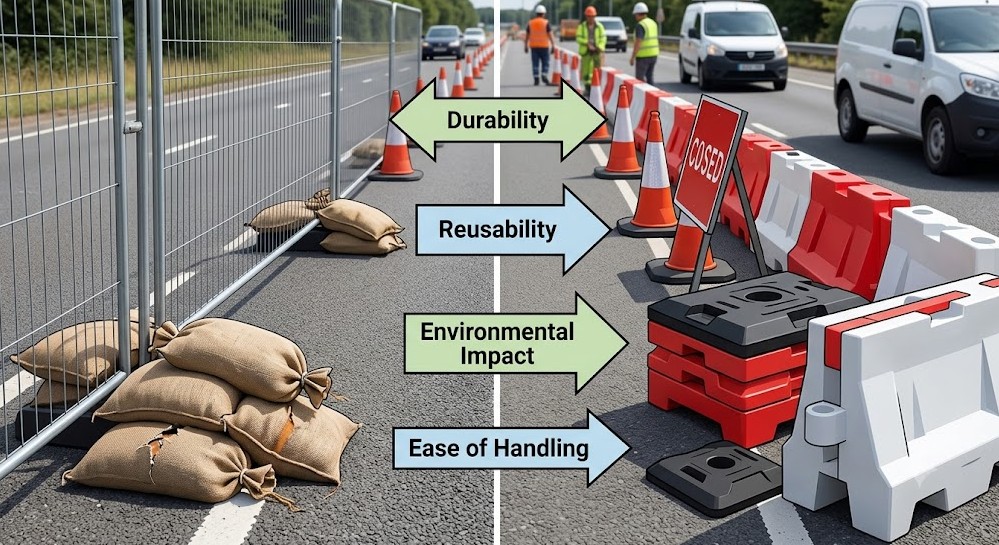
Traditional Sandbags vs Reusable Weight Systems: Cost Comparison
| Factor | Traditional Sandbags | Reusable Weight Systems |
|---|---|---|
| Initial Cost | Lower upfront cost | Designed as a long-term investment |
| Lifespan | Limited due to wear and weather | Built for repeated deployment |
| Replacement Frequency | Frequent replacement may be required | Minimal replacement needs |
| Weather Resistance | Can absorb water and deteriorate | Designed for outdoor environments |
| Labor Requirements | Requires filling and manual handling | Faster installation and easier handling |
| Transportation | Heavy and difficult to move | More efficient movement |
| Storage Needs | Requires large storage areas | Easier organized storage |
| Maintenance | Cleanup and replacement required | Lower maintenance demands |
| Long-Term Cost | Can increase over repeated projects | Better long-term value |
| Professional Appearance | Can appear temporary and worn | Cleaner professional appearance |
Sandbags vs Reusable Weights for Temporary Traffic Control and Construction
| Application | Traditional Sandbags | Reusable Weight Systems |
|---|---|---|
| Traffic Cones | Temporary solution but may shift or deteriorate | Provides consistent stabilization |
| Barricades | Requires frequent replacement and handling | Designed for repeated work zone use |
| Temporary Signs | May become unstable when damaged | Helps maintain positioning |
| Construction Equipment | Creates handling and storage challenges | Easier deployment |
| Event Equipment | Can affect appearance | Cleaner presentation |
| Outdoor Installations | Weather can reduce effectiveness | Built for repeated outdoor use |
Why Businesses Are Moving Away From Traditional Sandbags
Industries that depend on temporary safety equipment are looking for solutions that reduce downtime and improve efficiency.
The shift is happening because businesses need:
- Reliable performance
- Faster setup
- Less maintenance
- Better long-term value
Construction Companies Need More Reliable Weight Solutions
Construction companies use temporary weights for:
- Barricades
- Safety signs
- Work zone equipment
- Temporary barriers
On active job sites, equipment must remain stable despite wind, vehicle movement, and changing conditions.
Reusable weight systems help contractors maintain safer, cleaner, and more efficient work areas.
Traffic Control Companies Need Reusable Equipment
Traffic control companies frequently move equipment between projects.
They need solutions that provide:
- Consistent performance
- Easy transportation
- Faster deployment
- Reduced replacement costs
A reusable weight system allows companies to use the same equipment across multiple jobs instead of constantly replacing disposable solutions.
Event Companies Need Cleaner Temporary Solutions
Outdoor events require equipment that is both functional and visually professional.
Reusable solutions help event teams with:
- Cleaner appearance
- Faster installation
- Easier removal
- Better organization
This is especially valuable for festivals, sporting events, corporate gatherings, and temporary venues.
Benefits of Reusable Weight Systems Over Sandbags
Lower Long-Term Operating Costs
Although reusable systems may require a higher initial investment, they can reduce costs through:
- Fewer replacements
- Reduced labor
- Less cleanup
- Improved efficiency
The value comes from repeated use over time.
Improved Durability and Weather Resistance
Reusable weight systems are designed for demanding outdoor applications.
Benefits include:
- Reliable performance in changing weather
- Stronger durability
- Consistent stabilization
- Long-term usability
This makes them suitable for construction, traffic control, events, and temporary installations.
Easier Handling and Faster Installation
Time matters on every project.
Reusable weight solutions simplify operations by:
- Reducing manual handling
- Improving setup speed
- Making transportation easier
- Helping teams work more efficiently
Industries That Benefit From Replacing Sandbags
Construction Companies
Applications include:
- Barricade stabilization
- Temporary signs
- Work zone safety equipment
Traffic Control Companies
Applications include:
- Roadwork zones
- Lane closures
- Temporary traffic setups
Event Management Companies
Applications include:
- Outdoor events
- Crowd control equipment
- Temporary structures
Municipalities and Public Works Departments
Applications include:
- Infrastructure maintenance
- Public safety zones
- Temporary installations
Frequently Asked Questions
Why are sandbags so expensive compared to other weight solutions?
Sandbags become expensive because their real cost includes labor, transportation, storage, replacement, and maintenance not just the purchase price.
Are sandbags cheaper than reusable weights in the long run?
For occasional use, sandbags may seem affordable. However, companies using temporary weights frequently may save money with reusable systems because they reduce recurring expenses.
Why do sandbags need to be replaced so often?
Sandbags can be damaged by moisture, sunlight, transportation, and repeated handling, reducing their lifespan.
Are reusable weight systems better than sandbags for construction sites?
Reusable weight systems can provide better efficiency because they are designed for repeated use, easier handling, and consistent performance.
What is the best alternative to traditional sandbags?
Reusable weight systems are a strong alternative for businesses needing reliable temporary stabilization without the maintenance issues of disposable sandbags.
Can reusable weights replace sandbags for barricades and traffic control equipment?
Yes. Many reusable weight solutions are designed to secure traffic cones, barricades, signs, and other temporary equipment.
Do sandbags become more expensive in outdoor environments?
Yes. Weather exposure increases replacement and maintenance costs over time.
How can companies reduce costs associated with temporary weight solutions?
Companies can reduce costs by choosing durable reusable systems that lower replacement frequency, improve efficiency, and reduce labor requirements.
Conclusion
The answer to “Why Are Sandbags So Expensive?” is not simply the price of the bag or the sand inside it. The real expense comes from everything that happens afterward: handling, transportation, storage, weather damage, replacement, and cleanup.
For businesses that regularly need temporary stabilization, traditional sandbags can become an inefficient and costly solution.
Reusable weight systems provide a more practical alternative by offering improved durability, easier handling, cleaner storage, and reliable performance across demanding applications.
Whether securing traffic cones, barricades, temporary signs, or outdoor equipment, choosing a reusable weight solution allows companies to reduce recurring costs while creating safer and more professional work environments.