A canopy that shifts in the wind is telling you something before it becomes a real problem. Tents rarely go from fine to airborne in a single step, since they creep, lift a corner, walk a few inches across a lot, and then one gust finishes the job. If your tent is moving, here is what is causing it and what actually stops it.
Understand What the Wind Is Doing
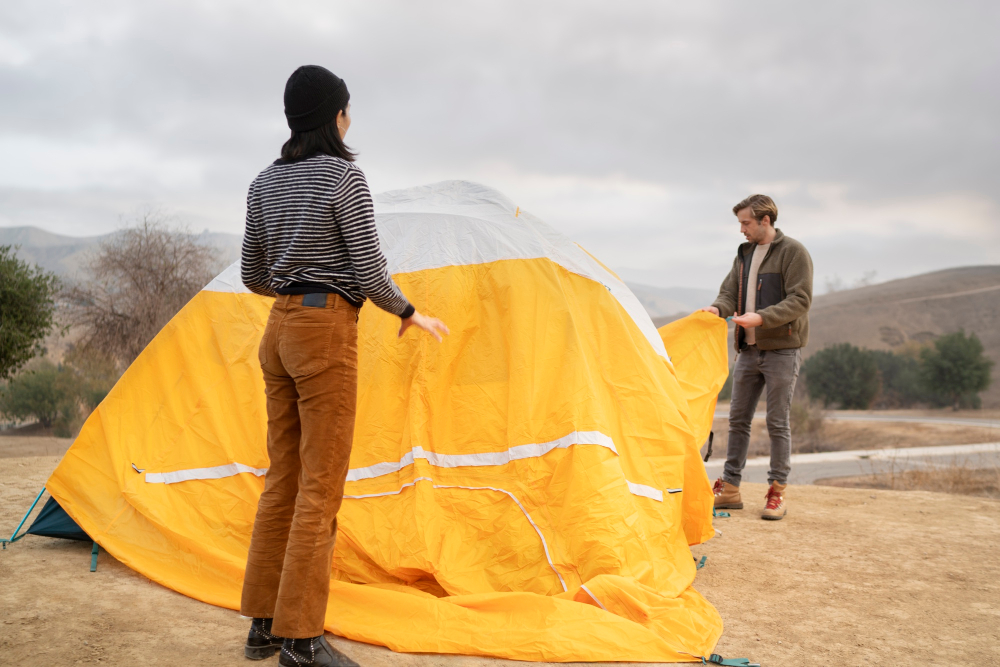
A canopy does not behave like a wall, it behaves like a wing. Air moving across an open lot slips under the peak and pushes up against the underside of the top, and that force is lift, working against gravity rather than sliding the tent sideways. The frame gets lighter, the legs get easier to move, and then side load pushes the whole thing along the ground.
This is why a tent can start walking in wind that does not feel especially strong. The wind is not shoving the tent, it is unweighting it, and a tent that weighs less is easy to shove. It also explains why tents fail at one corner rather than all at once. The upwind leg takes the lift first, that corner comes up, and the rest follows it over. Anchoring three legs well and one leg badly gives you a tent that is held down by the one bad leg.
Reason One: Nothing Is on the Legs
This is the obvious cause and it is more common than it should be. A tent set up on asphalt or a hard lot cannot be staked, so the crew skips anchoring and hopes for a calm day.
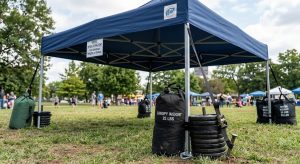
That works until it does not, and the cost of it not working is the tent, whatever is under the tent, and whatever the tent hits on its way across the parking lot. A canopy tumbling through a crowd is the outcome nobody wants to think about, and it is the reason ballast is not optional at events. Every leg needs weight, and that means all of them rather than the two on the windward side.
Reason Two: The Weight Is Lighter Than You Think
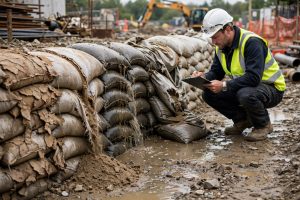
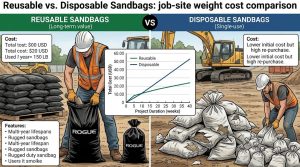
Most tent ballast is sandbags, and sandbags lose weight quietly. They get dragged across asphalt during setup and teardown, the fabric wears through, and sand runs out through the opening. A bag that started at 40 pounds is holding 25 by the middle of the season, and nobody weighs it because the tent stood up last weekend and everyone assumes the bags are doing their job.
An operator running events every weekend is working with a set of weights that is quietly getting lighter all season long. The tent is fine until the one windy Saturday, which is exactly the day it matters. If your tent started moving and nothing else changed, this is the first thing to check.
Reason Three: The Ballast Is Not Attached to the Leg
Weight sitting near a leg does nothing at the moment the leg lifts. A sandbag draped over a foot or leaning against a leg is not connected to it, so the frame comes up, the bag stays down, and the tent is free to go. The bag can be full and intact and still contribute nothing when it is actually needed.
Ballast has to be tied, strapped, or otherwise linked to the leg. Regardless of what you are using, the connection between the weight and the frame is the part doing the work, and it is the part crews most often skip.
Reason Four: It Is Not Enough Weight
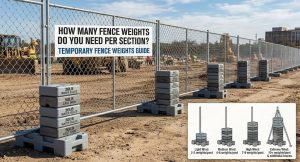
Sometimes the setup is right and the number is simply too low. The ballast a tent needs depends on the frame, the size, and the conditions on the day. Tent manufacturers publish weight requirements for their frames, and venues, municipalities, and event permits often set their own minimums on top of that. Those numbers govern the decision, and a rule of thumb from a forum does not.
Check the frame manufacturer’s specification and your local requirement before the event and build to it. If you cannot hit the number, that is useful information to have before the tent is up rather than after it has moved.
Reason Five: The Weights Are Sliding
On a smooth surface, weight that is not gripping anything simply slides. A soaked sandbag on wet asphalt slides easily, and a stack of bags slides apart under load, so the tent walks and takes the ballast with it. From a distance that looks like the ballast failed, when in fact it never had any purchase to begin with.
Solid weights with a flat, high-friction base sit considerably better on a hard surface. Rubber in particular grips rather than skates, which matters on the paved lots where most event tents get set up.
Reason Six: Water
Rain is normal at outdoor events, and it takes sandbags apart. Wet bags rot, and bags stored wet in a trailer come out moldy and brittle for the next event. A partly empty bag in standing water floats away entirely. The day it rains is usually the day it is also windy, so the ballast is failing at the same moment the load on it is peaking.
Solid rubber does not absorb water and will not float, and it weighs the same soaked as it does dry, which means the number you planned around is still the number you have when the weather arrives.
What Actually Holds a Tent Down
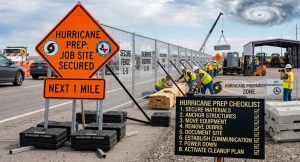
Work through those causes and the requirements come out simple. The weight has to be on every leg, it has to be connected to the leg, it has to weigh what you think it weighs, and it has to still weigh that when it is wet. Sandbags fail all four of those over a season, since they lose mass invisibly, they do not connect to anything on their own, they rot, and they float.
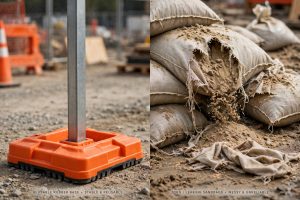
The Stand Box is 30 pounds of solid compressed recycled rubber. Placed upright on the foot of each leg and secured to the frame, it holds a known quantity that does not change over time. There is nothing inside it to leak, so it is 30 pounds this weekend and 30 pounds three years from now, and it will not float, it does not rot, and it does not come out of the trailer moldy in the spring. Interlocking knobs on top and matching holes on the bottom let units stack when a frame calls for more than 30 pounds per leg, and the stack stays together when it is loaded.
For an operator loading in and out every weekend, the reusable part is what changes the math. Sandbags are consumable, while rubber comes back and goes out again.
Before the Next Windy Event
Weigh your ballast rather than eyeballing it, and confirm every leg has weight rather than only the windward ones. Confirm the weight is secured to the frame rather than resting beside it. Look up the manufacturer specification and the local requirement, then build to whichever number is higher.
There is one more item that no ballast replaces, which is taking the tent down when conditions call for it. No anchoring setup makes a canopy safe in a storm. Weights buy margin in normal wind, and they are not a substitute for calling it early.
Wrap-Up
Wind moves tents by lifting them rather than pushing them, which is why ballast on every leg, connected to the frame, is the whole game. If your tent keeps moving, the weight is probably lighter than you think or it is not tied to anything.
Fix those and the tent stays where you set it. Keep chasing it across the lot and eventually one gust wins.